I have never considered myself a ‘city slicker.’ My blood runs with generations of hard farm labour. Unfortunately, my hands usually appear to be holding a camera, smartphone, or something else you can buy at a shopping mall.
This is why, when our habitat enhancement coordinator, Jon, handed me a pickaxe and led me into the woods, I was excited to get back to my roots – and get at the roots of invasive species.
As we dove headlong into the woods of the Three Creeks property, several things hit me:
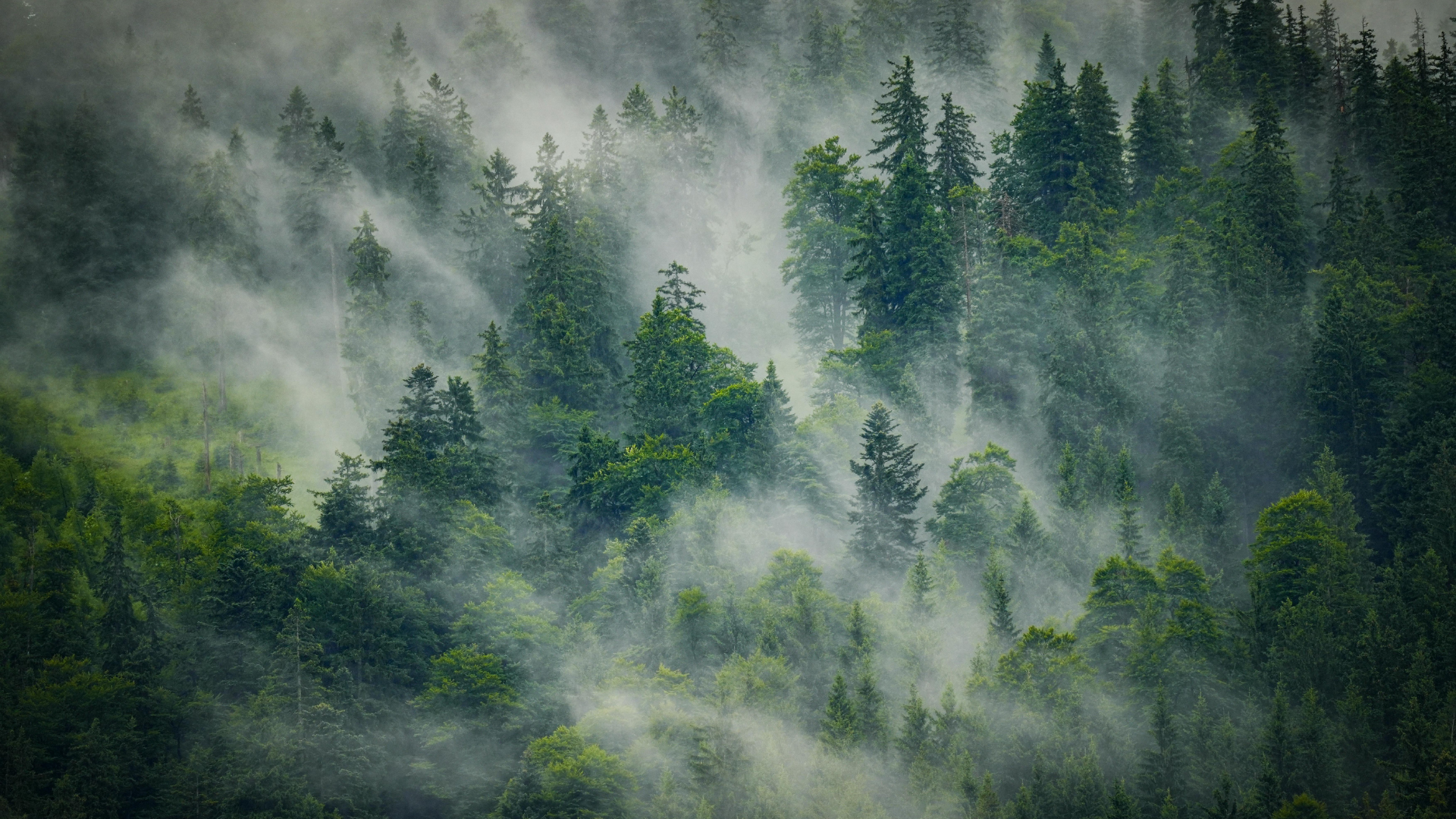
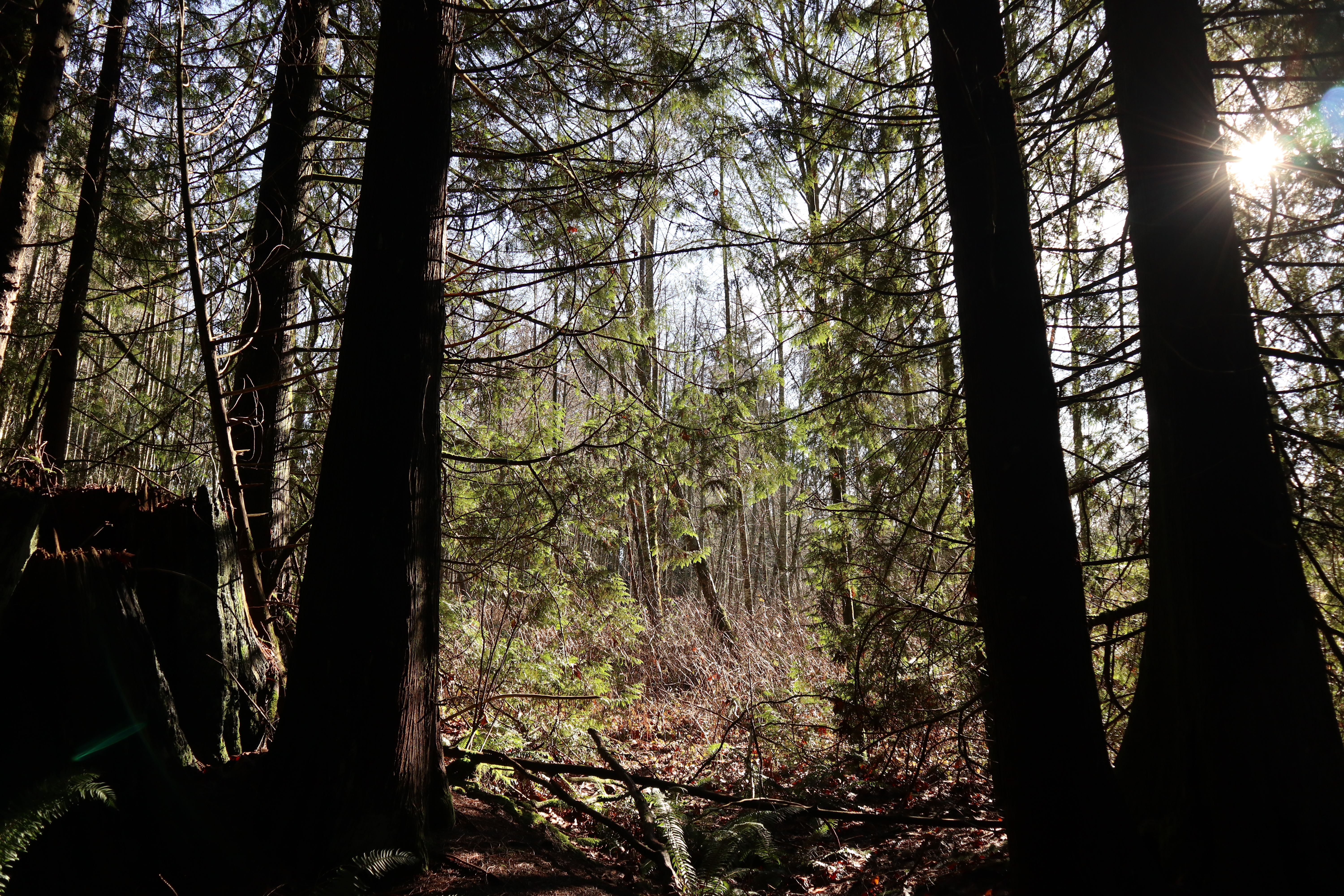
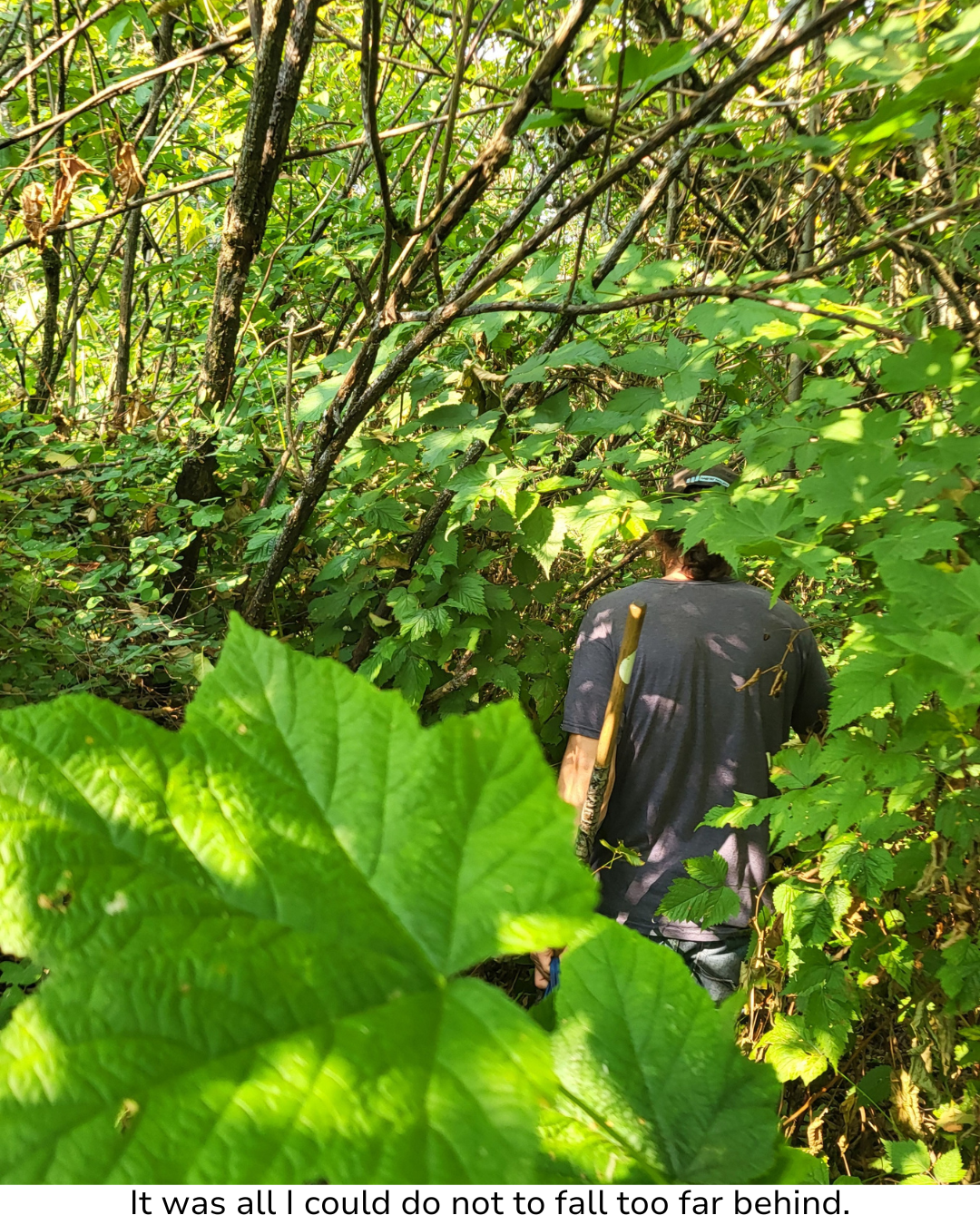
Expecting some kind of maintained trail system, I was surprised to find that traversing the property involved following Jon at a brisk pace through completely wild territory. As we entered a clearing of sorts, with ferns below and towering trees above, I was struck by the serenity we found just a few metres from a suburban neighbourhood. The morning sun dappled through the trees, birds chirped, and Jon pulled a slug off of his pant leg.
This was nature.
Earlier that week, Jon had sent us trail camera footage of bears on the property having some rambunctious fun with one another. On our visit, as he walked up to the trail cam, I put two and two together and realized that we had just walked through the very space those bears had recently occupied. Needless to say, this was extremely cool. It really enhanced the connection to nature I was already feeling.
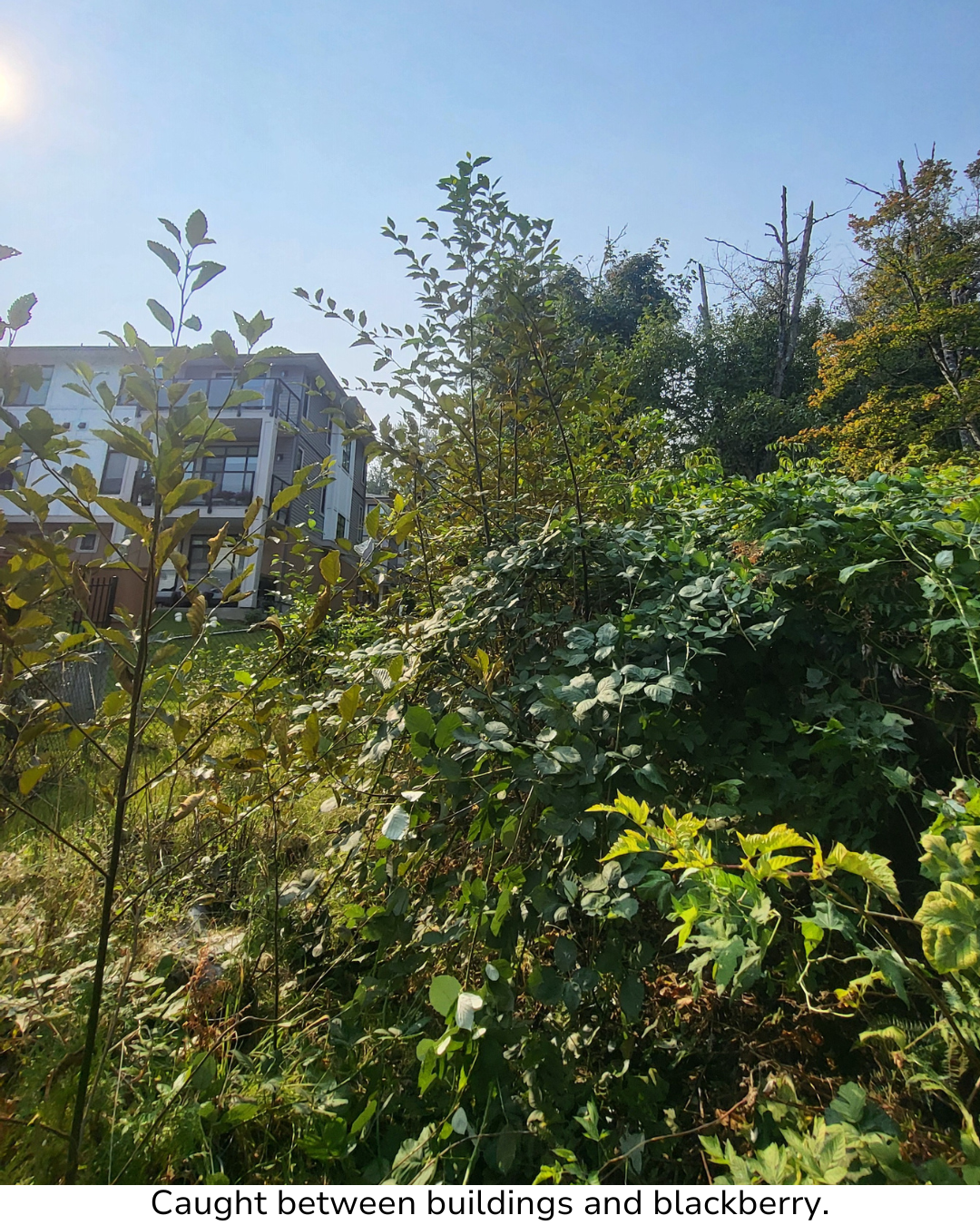
As we walked to the place where we’d be doing our invasive removal for that morning, there was a definite change in the environment. Those trees that had managed to break out from the wall of Himalayan Blackberry were not nearly as lush as those from the deeper wooded area, and rather than a diverse array of ferns and shrubs, you could almost feel the mass of Himalayan Blackberry looming across the area.
Jon called it an ‘opportunist’ plant, and explained that the construction of the new development not 10 metres to our backs had literally changed the composition of the soil in the area – not so good for the native plants, but perfect for an invasive species looking for open space. Funny how that works, isn’t it?
In a movie called The Ruins, a killer plant picks off a group of unsuspecting American tourists on top of an ancient ruin. The vine often moves independently, sending tendrils creeping slowly towards exposed flesh, sort of like if the shark in Jaws was greener, leafier, and in general more plant-like.
(I’m a media guy. There’s usually a movie on my mind.)
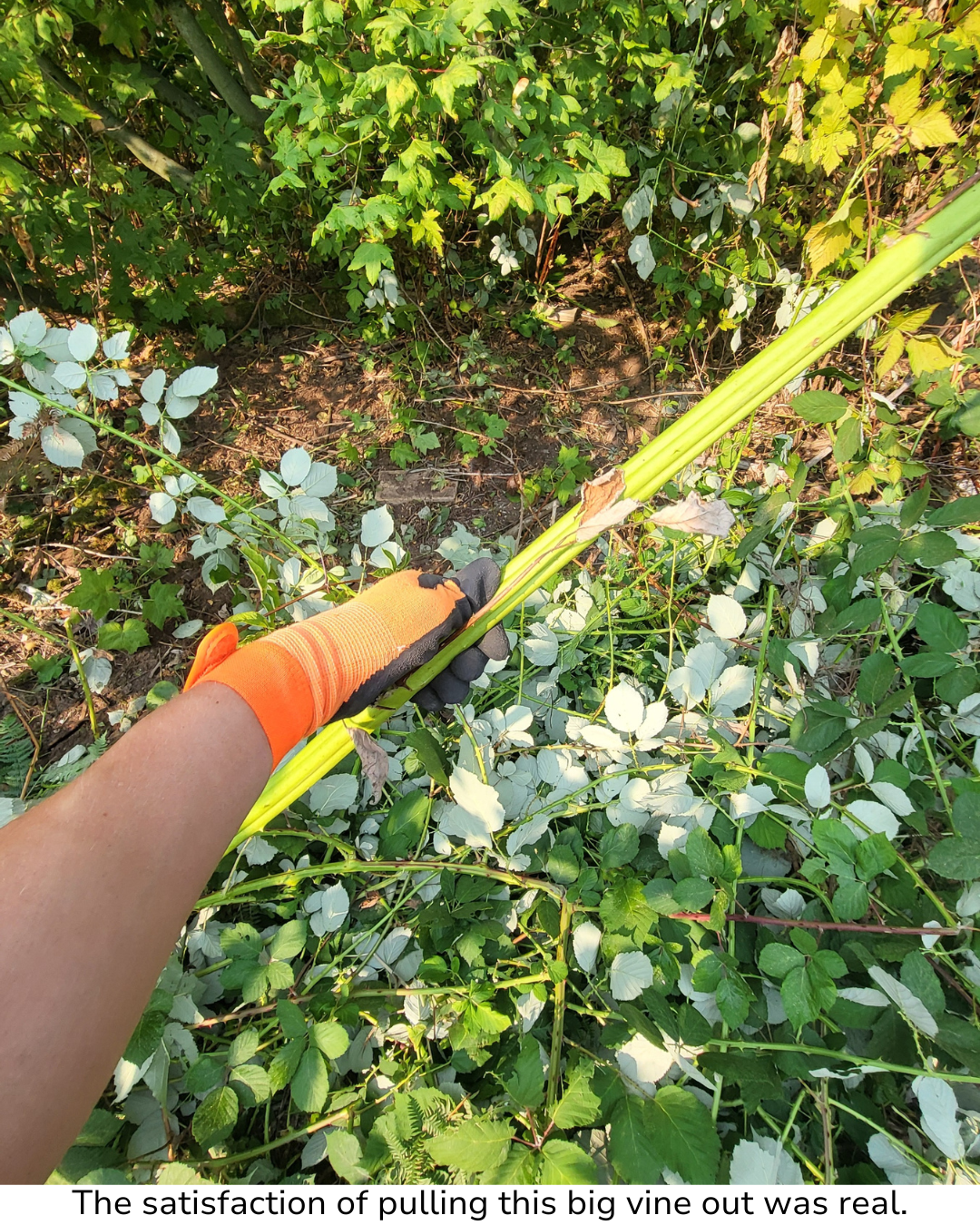
I say all this to express what it felt like to be there that morning in the warm sun, carefully extricating this thorny invasive from places where it was not meant to be, namely, our Three Creeks property, and also, incidentally, my arms and legs.
You could almost feel it reaching out, trying to maintain a prickly grasp on the landscape, as even after trimming sections, it latched desperately onto its surroundings.
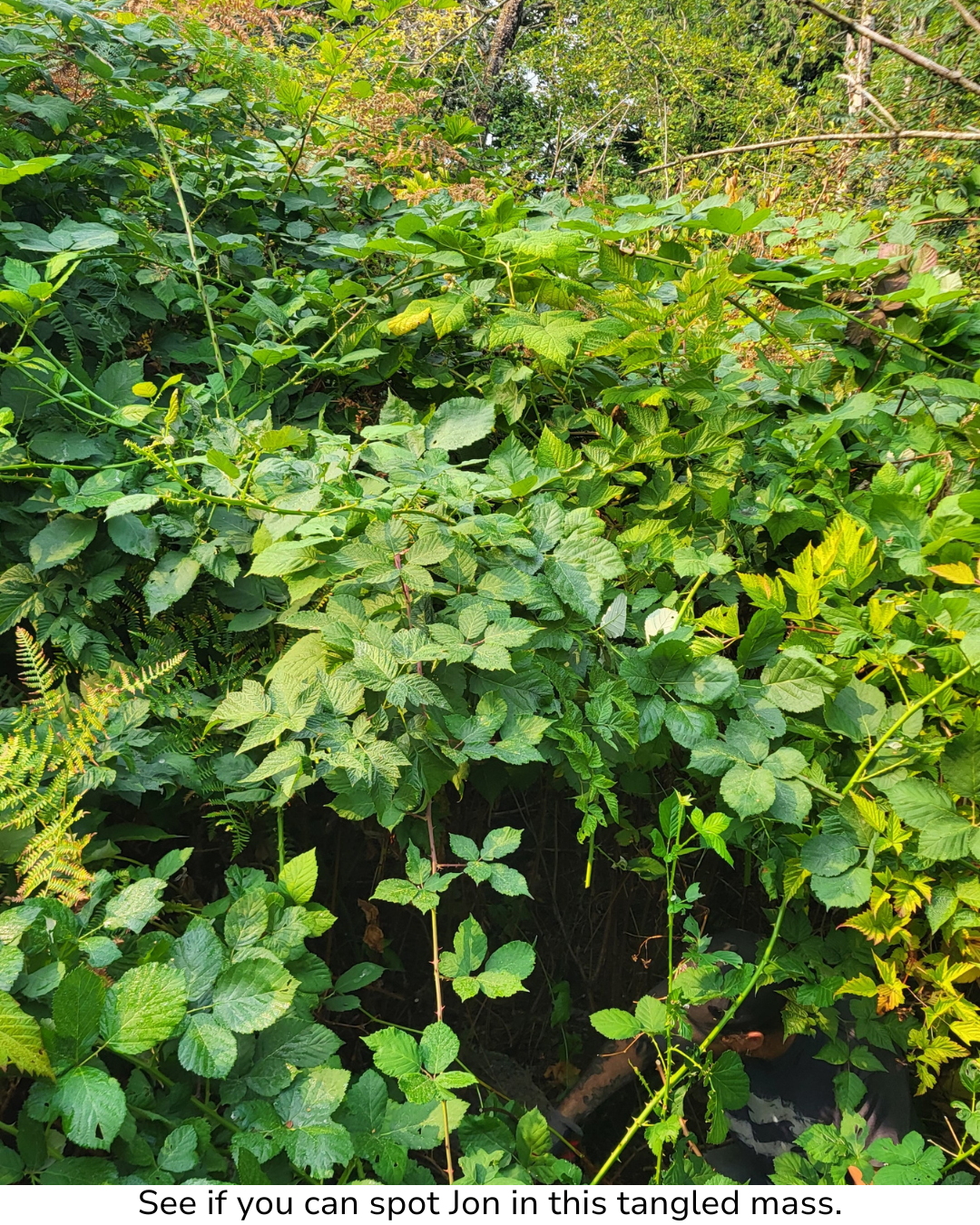
Though it was certainly a demanding task, the satisfaction I felt as I pulled the invasive blackberry away from the area was unmatched. I could almost hear the few native plants in the small section breathe a sigh of relief.
Himalayan Blackberry harms more than just other plants and innocent communications assistants, though – it can also be a terrible obstacle for animals trying to move through their own homes. Considering this, I wondered if, like the serene clearing we had co-experienced earlier, those bears had also struggled with the impassible thorns Jon and I were trying to remove.
As development on McKee Peak continues, Himalayan Blackberry and other invasive plants will undoubtedly take advantage of vulnerable environments, encroaching on already shrinking homes for native plants and animals. This is why the Three Creeks property is so important and only grows in significance.
Though I have been grateful to be able to support the work of the Conservancy with my digital skills, it was another thing entirely to be out in the field with Jon that day doing work that was entirely hands-on. Connected is certainly one word to describe how I felt, and in a change of pace for my usual workday, that connection was not a digital one.
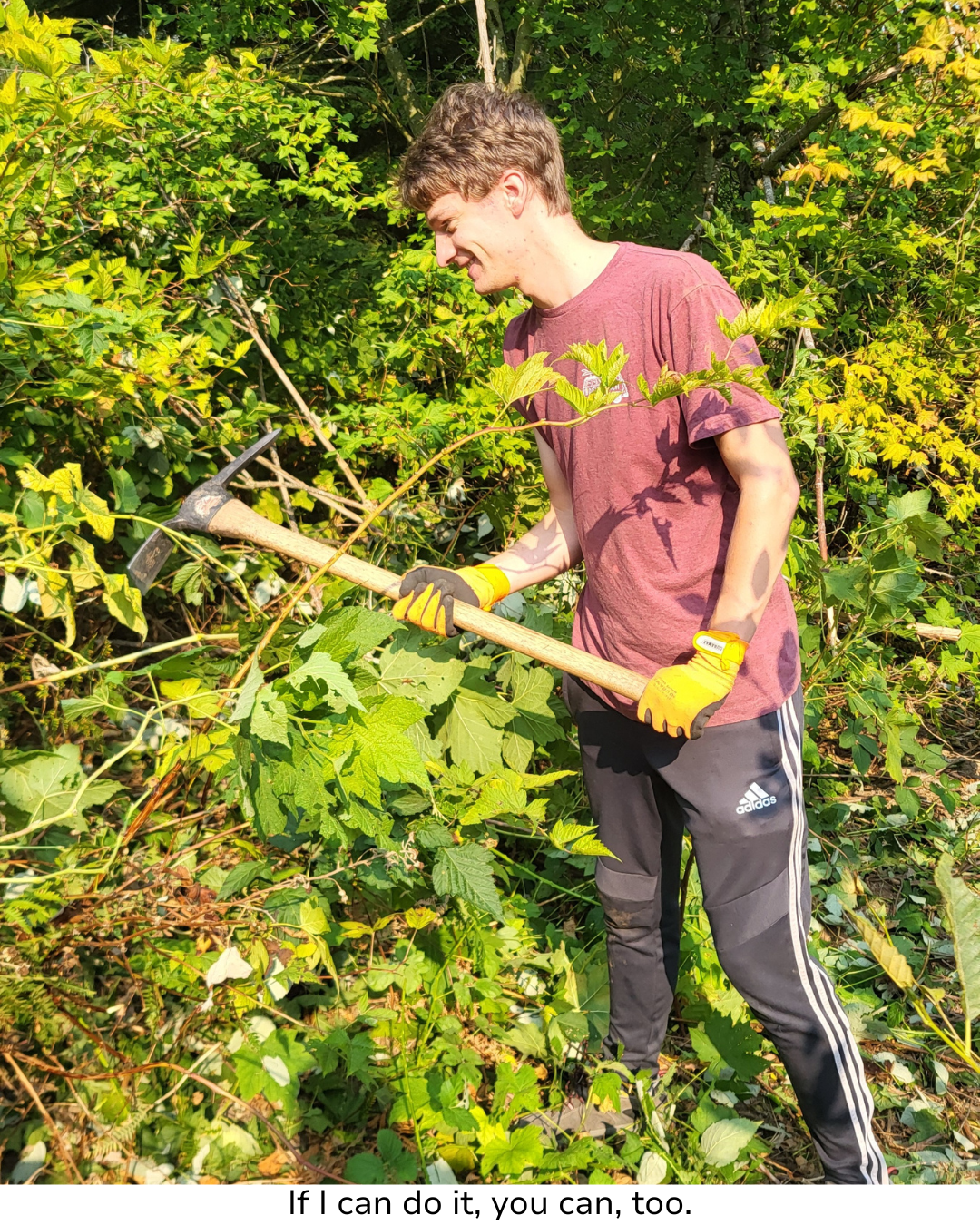
If a scrawny guy who is more used to filmmaking than weed-pulling can help out, I’m sure you can, too. Consider checking out our Native Plant Gardening webpage – it has all the info you need to start making your backyard a great place for local wildlife.
And, you can get involved just like I did by checking out any of our events – whether you want to get your hands dirty or just want to learn some more, our events page is always full of opportunities.
If you live near Three Creeks, or just want to know more about the property, please visit our dedicated webpage.