
Habitat Enhancement
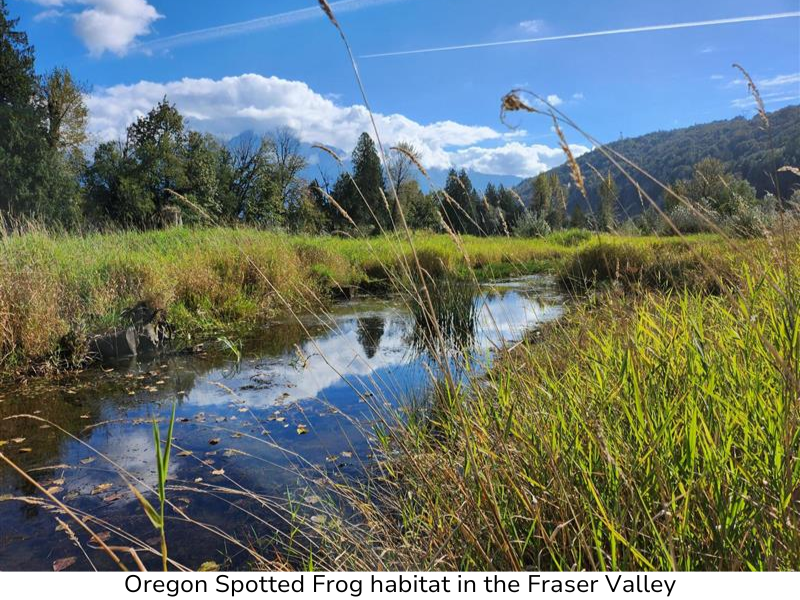
We work to restore shallow wetland habitats across the Fraser Valley with an eye for critical Oregon Spotted Frog habitat features.
These frogs are only found in the Fraser Valley, with populations currently inhabiting select locations in four different watersheds. As their remaining habitat is highly restricted, the number of places this frog can survive is limited.
Occupying warm, shallow wetlands with plenty of aquatic and emergent vegetation, these frogs are masters of camouflage. They are also highly aquatic, rarely leaving the water unless they need to move locations. Because of this it is important for them to have access to different kinds of aquatic habitat for the seasons. Shallow shelves are essential in the spring for breeding, warm, open channels in the summer and fall for foraging, and deeper water with plenty of cover in the winter for hibernation. These are all examples of essential habitat that must exist within a wetland for Oregon Spotted Frogs to survive there.
We believe that more populations may be out there – but as this is a cryptic species, they are hard to find.
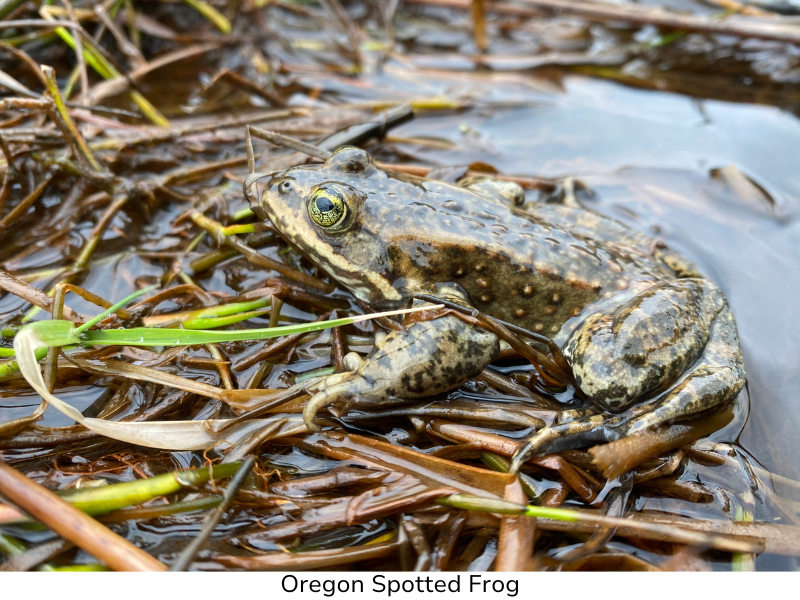
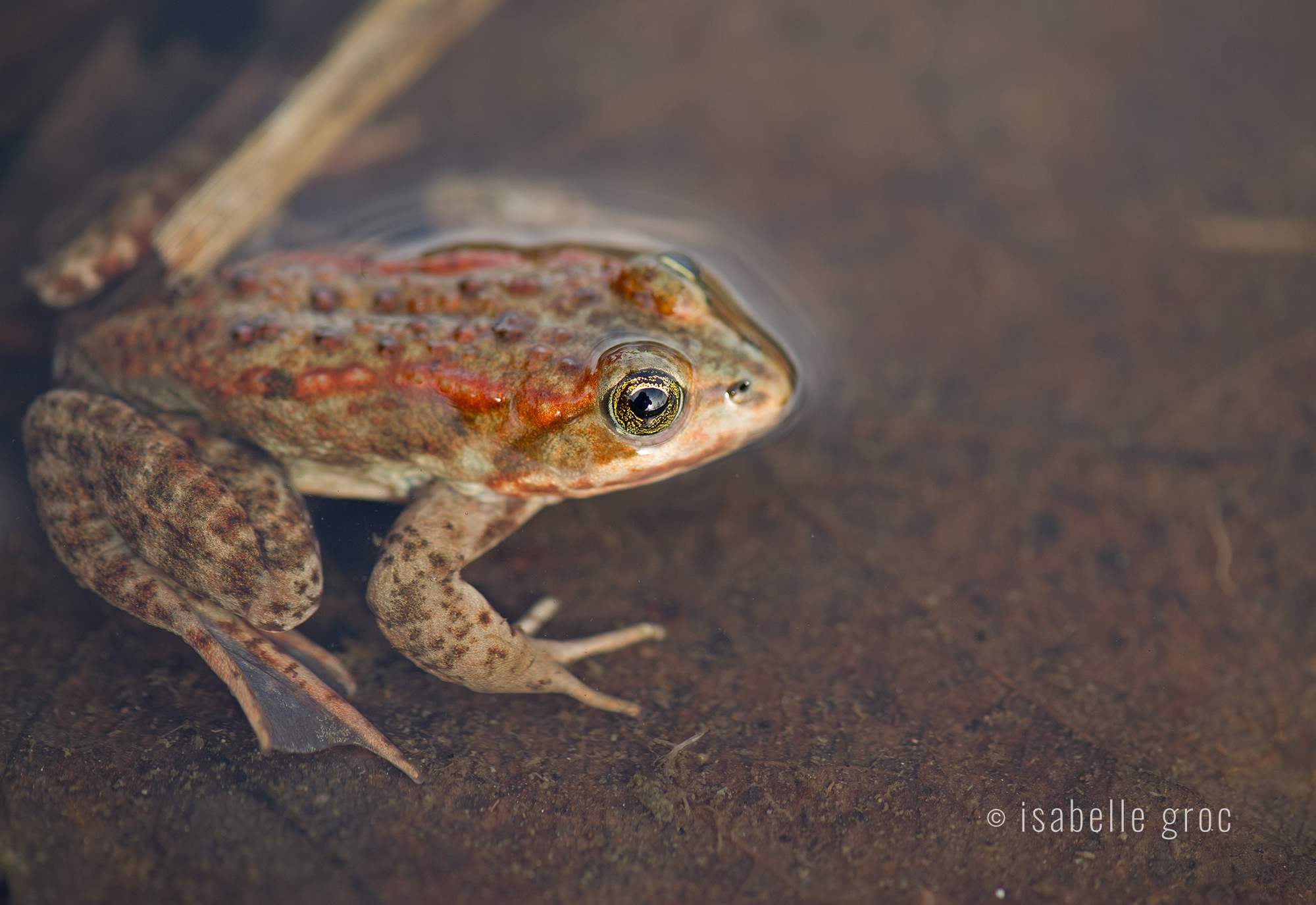
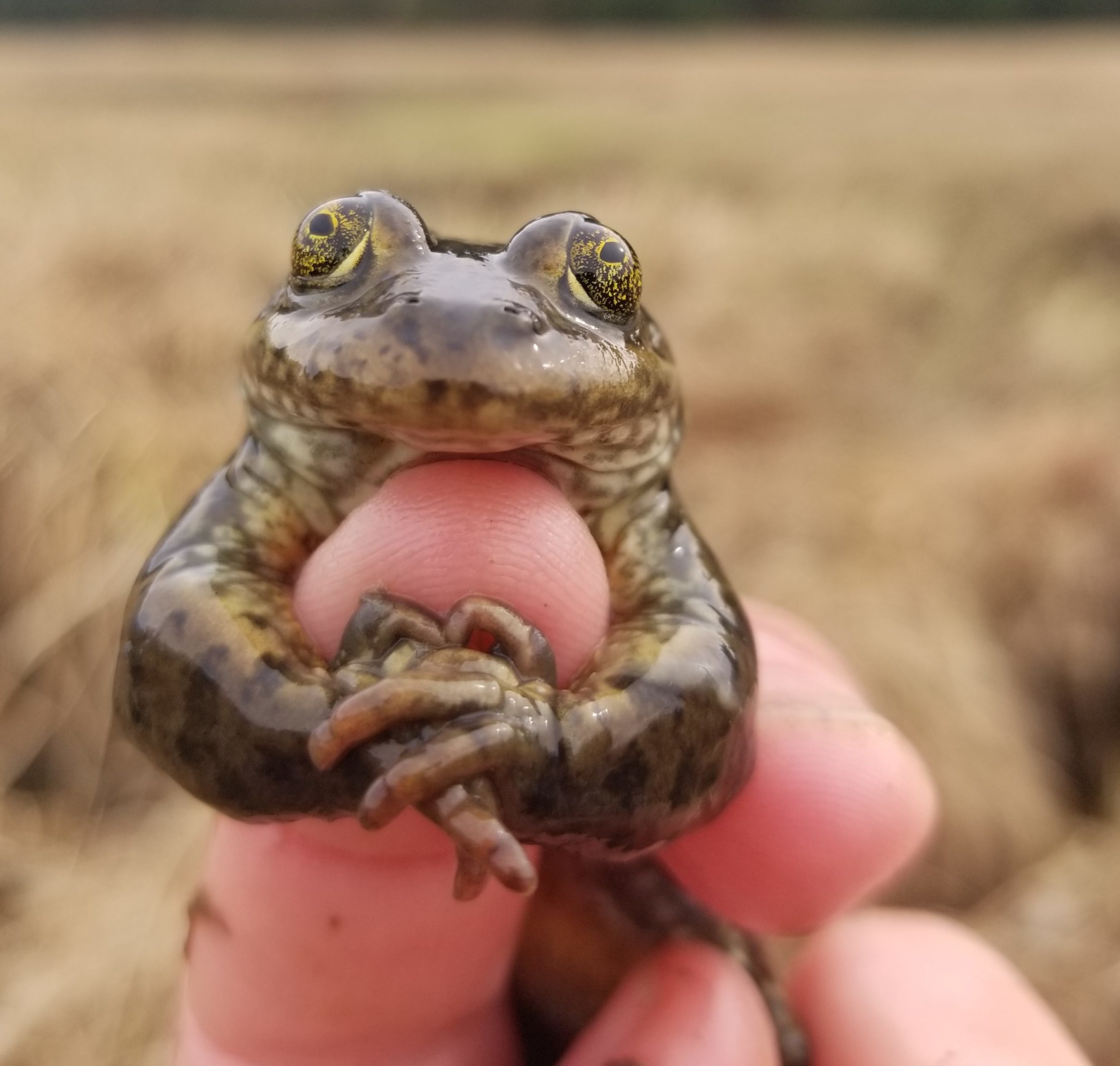
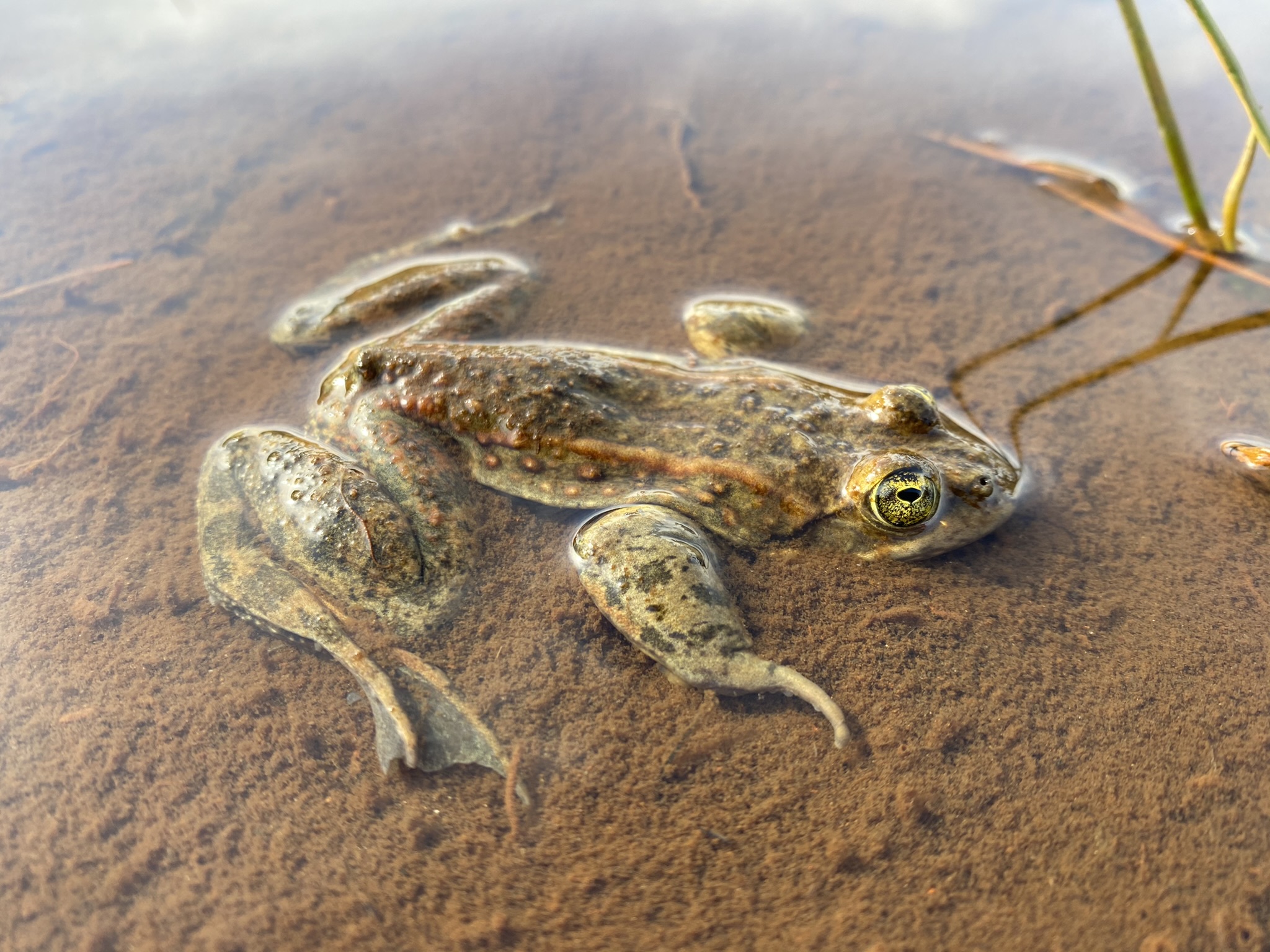
The Oregon Spotted Frog can be highly variable and is often confused with similar looking species such as the Northern Red-legged Frog and Green Frog.
Some key features to look for when identifying an Oregon Spotted Frog:
For more information on identifying features and a comparison to the Northern Red-legged Frog, read our Frog and Toad Tadpole Identification Guide as well as other references listed at the bottom of this page.
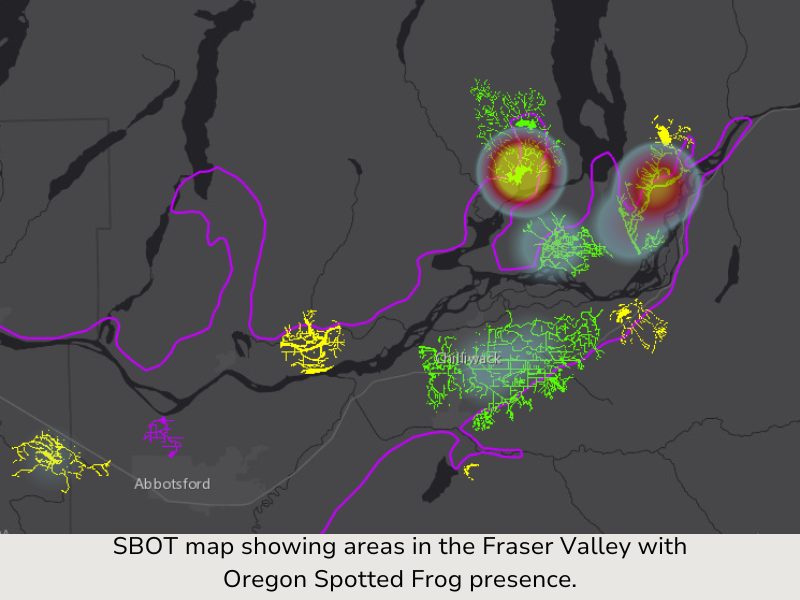
The Oregon Spotted Frog Recovery Team is a compilation of experts working together to better understand the remaining populations of Oregon Spotted Frogs and to prevent their extirpation. Using tools such as the province’s Stewardship Objective Baseline Tool (SBOT), the data on these populations is available to the public.
For inquiries about sightings, range, policy and permits contact the BC Ministry of Water, Lands, and Resource Stewardship office at: SCFishandAquaticWildlife@gov.bc.ca
To report sightings and for questions about amphibians, contact the FVC at: preciousfrogcanada@gmail.com
Alternatively, submit your frog sighting on our Frog Finders program page.
Frogs
Populations
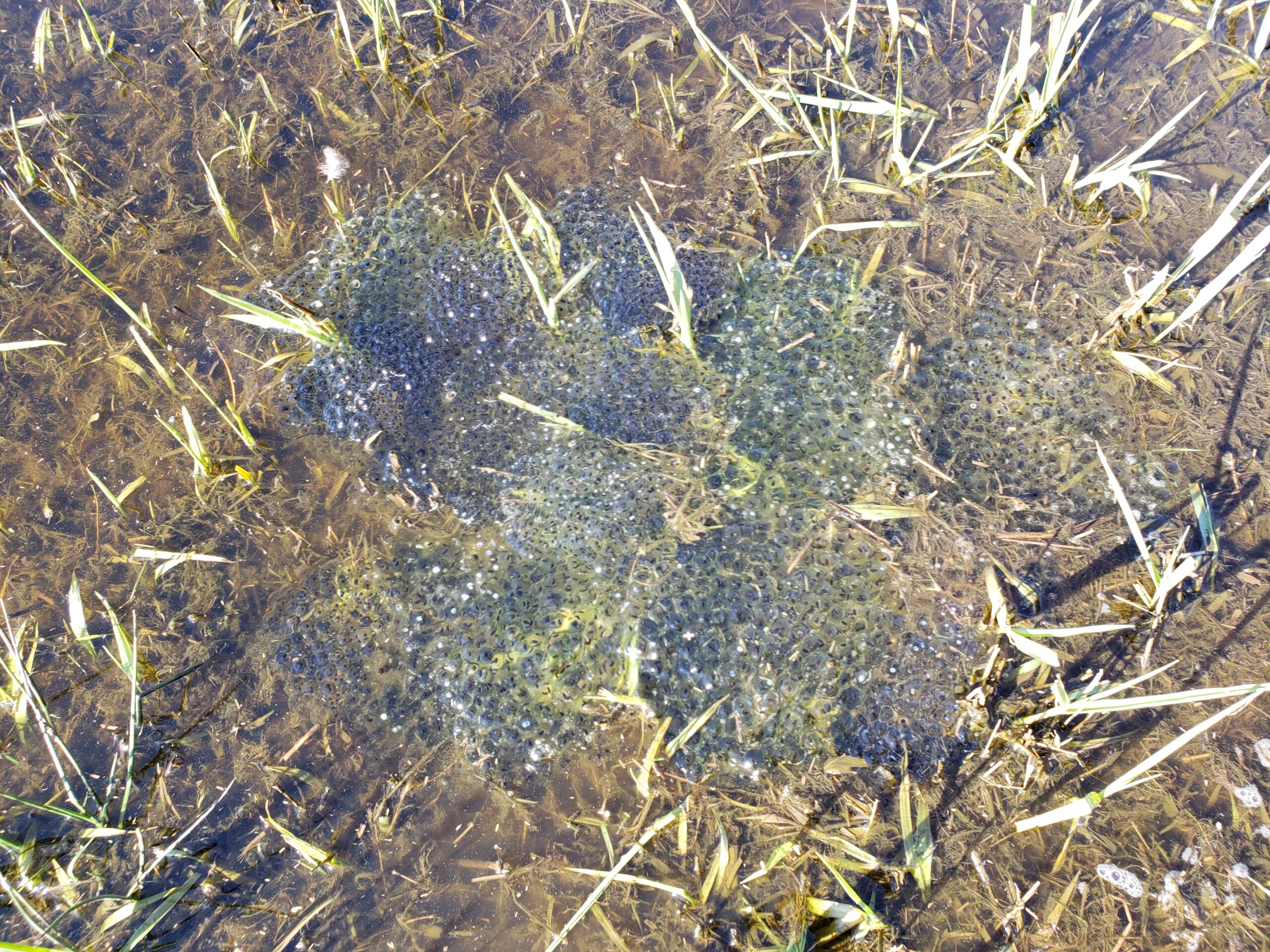
Egg masses
Oregon Spotted Frogs face a multitude of challenges to their survival.
The Oregon Spotted Frog is associated with medium to large wetlands, where the water is shallow, slow moving, and warm. The wetlands they inhabit have a portion of the area that is permanently wetted with an abundance of emergent plants such as native grasses, sedges, or rushes.
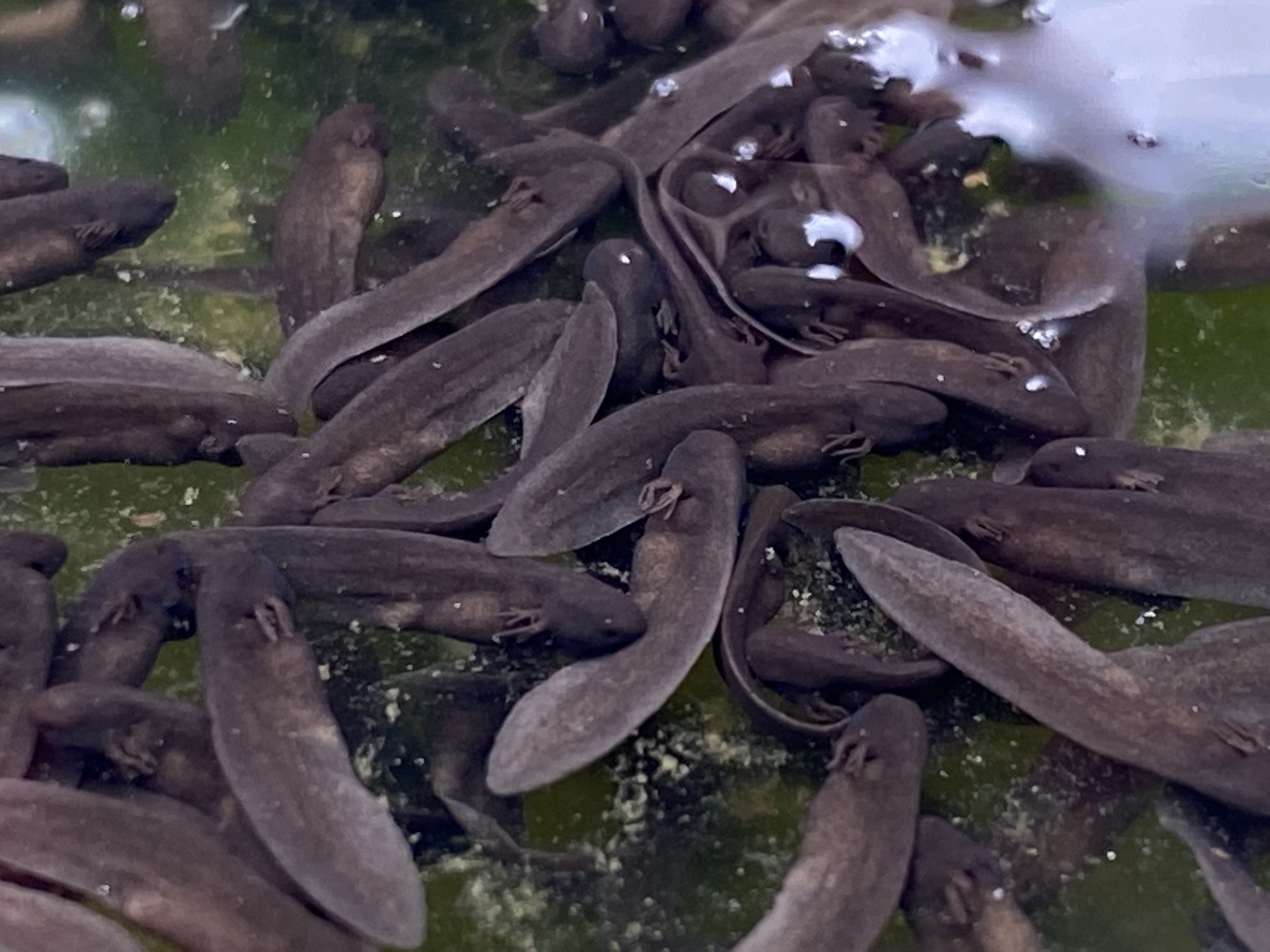
Within these wetlands, a diversity of micro-habitats are required depending on life stage, season, and weather conditions. For example, breeding sites tend to be seasonally flooded areas along sun‐exposed sloping margins. Stable water levels are critical for survival of eggs and tadpoles. Though fluctuations in water levels are a normal part of the hydrology in the Fraser Valley, declining water levels during the wrong seasons can result in leaving young frogs to dry out. Adult frogs are known to take refuge in several different types of habitat depending on seasonal challenges. These micro-habitats include deep pools, soil or mud along wetland edges during dry periods, as well as beaver dams and lodges during cold periods.
Some frogs have managed to survive in the modified ecosystems which have become commonplace across the Fraser Valley, so with some careful planning, and a better understanding of the frogs’ needs and sensitivities, there might be a place for the Oregon Spotted Frog in a human-dominated landscape.
As historic wetlands and floodplains were eliminated, connections between watersheds and waterways were lost. These essential corridors allowed the highly aquatic Oregon Spotted Frogs to move without leaving the water and access their seasonal habitats. Without these connections, the frogs have been forced into linear stream systems that may not be able to sustain a population due to lack of permanent water or unsuitable habitat features.
Another issue with this loss of connectivity is that already small populations become isolated from one another, which can lead to genetic issues and lack of long-term viability. Because they are in these small pockets of habitat, the chance of new frogs moving in is also very slim. The animals that are left are unable to move between populations on their own. Without significant help from the recovery team, numbers in all populations are currently too low to sustain long term survival.
Through the movement of foreign species by humans, new species have come to the Fraser Valley in the last hundred years. Oregon Spotted Frogs, as well as all other native species must directly compete with invasive species such as Bullfrogs and Green Frogs. Both of these invasive frog species depend on year-round wetted areas, just like the Oregon Spotted Frog (and unlike our other native amphibian species). Because of this, it puts a lot of pressure on Oregon Spotted Frogs as they compete for food, hiding spots and space. Bullfrogs are also very capable of eating adult Oregon Spotted Frogs.
These pressures from other invasive frogs all occur while Oregon Spotted Frogs face the loss of their specialized breeding habitat due to invasive plant species like Reed Canarygrass. As these invasive plants move in, the shallow shelves and sunny wetlands Oregon Spotted Frogs rely on can become overgrown and unsuitable for occupation.
Learn more about Bullfrogs and their impacts on our American Bullfrog page.
The Oregon Spotted Frog is also susceptible to fungal diseases like Chytridiomycosis, which affects around 30 percent of the planet’s amphibian species. This disease is responsible for dramatic amphibian declines, and there is no known cure.
Amphibians are particularly sensitive to changes in the environment, particularly those that affect water and temperature conditions. They rely on environmental conditions to regulate their body temperature, and physical changes in habitat, like draining wetlands or removing vegetative cover, can dramatically alter thermal conditions. Climate disruption is a serious threat to amphibians, and most are not equipped to adapt to climactic changes.
Oregon Spotted Frogs can be exposed to a wide range of aquatic pollutants during their sensitive egg and tadpole development phases. This can result in slow or abnormal development that affects their survival and their own ability to reproduce.
We have worked alongside our partners to protect these precious frogs and their habitats since 2010.
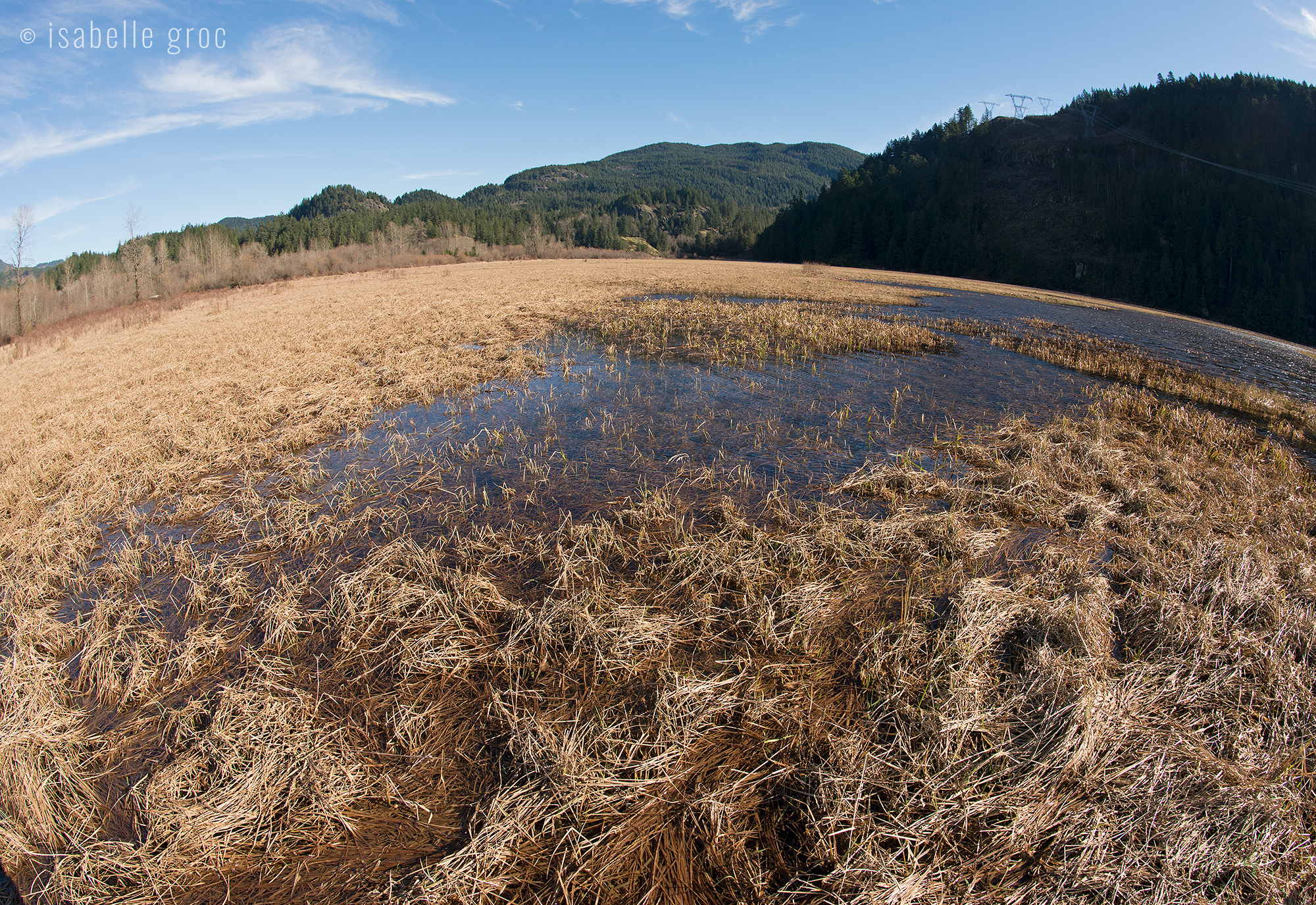
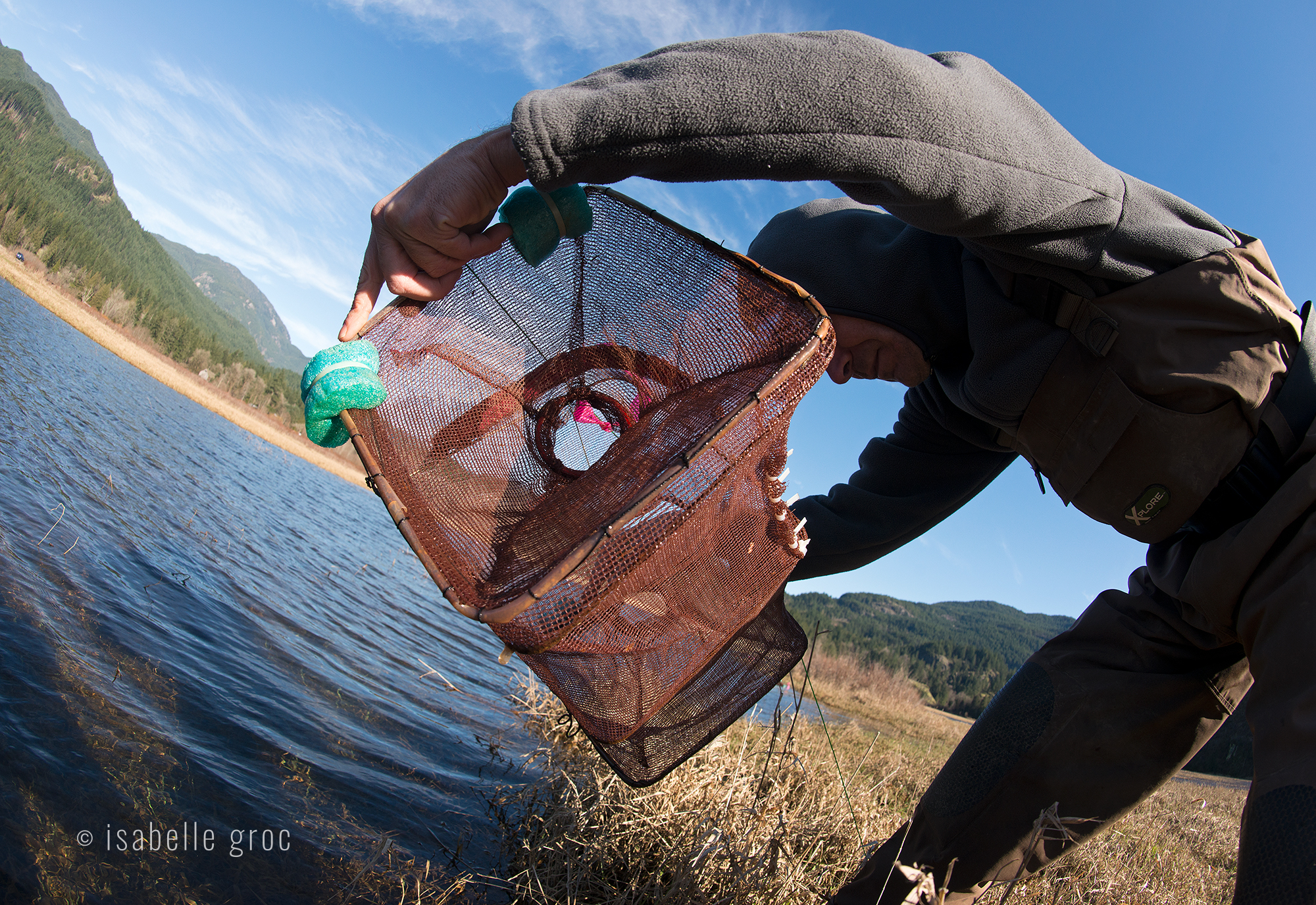
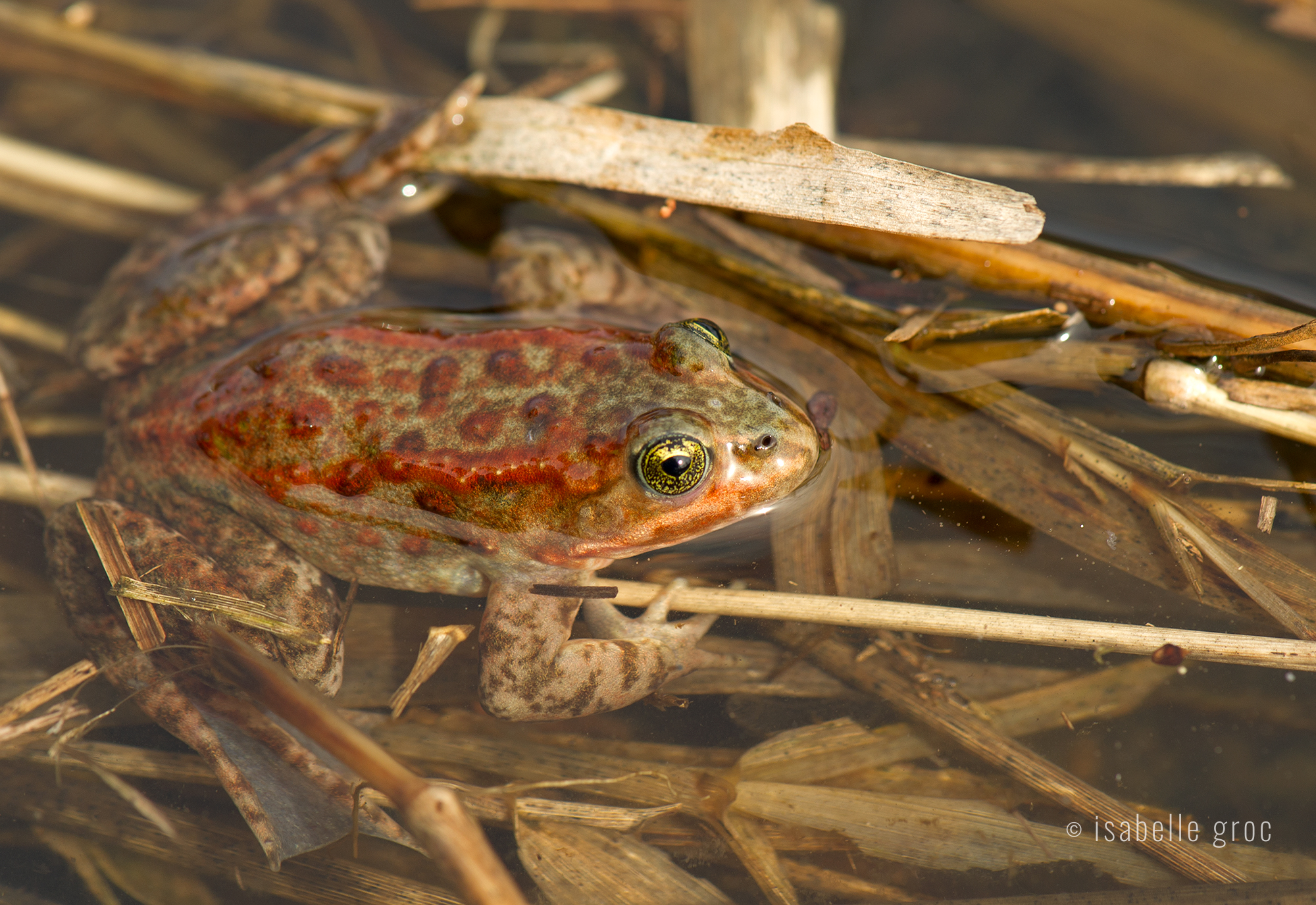
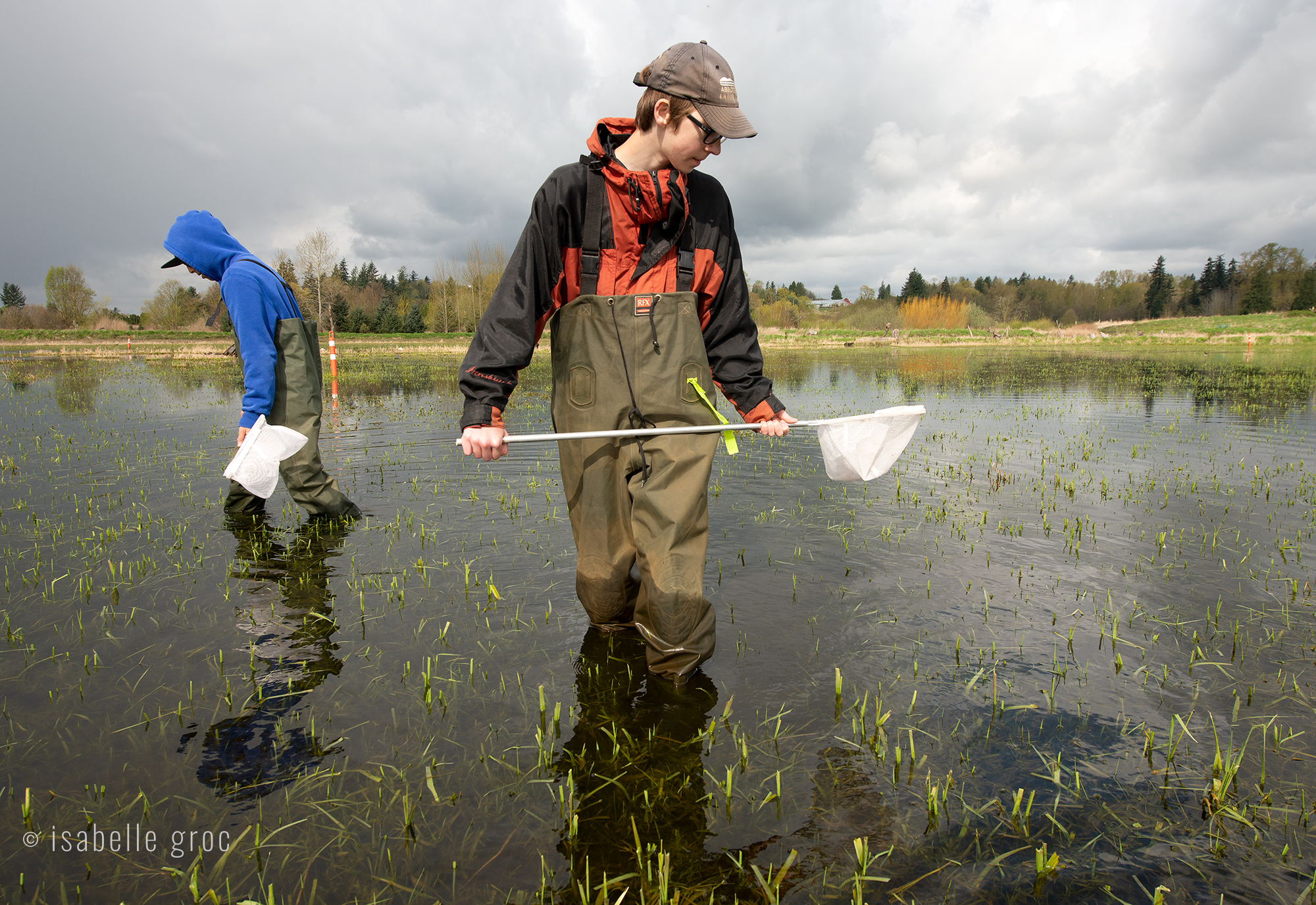
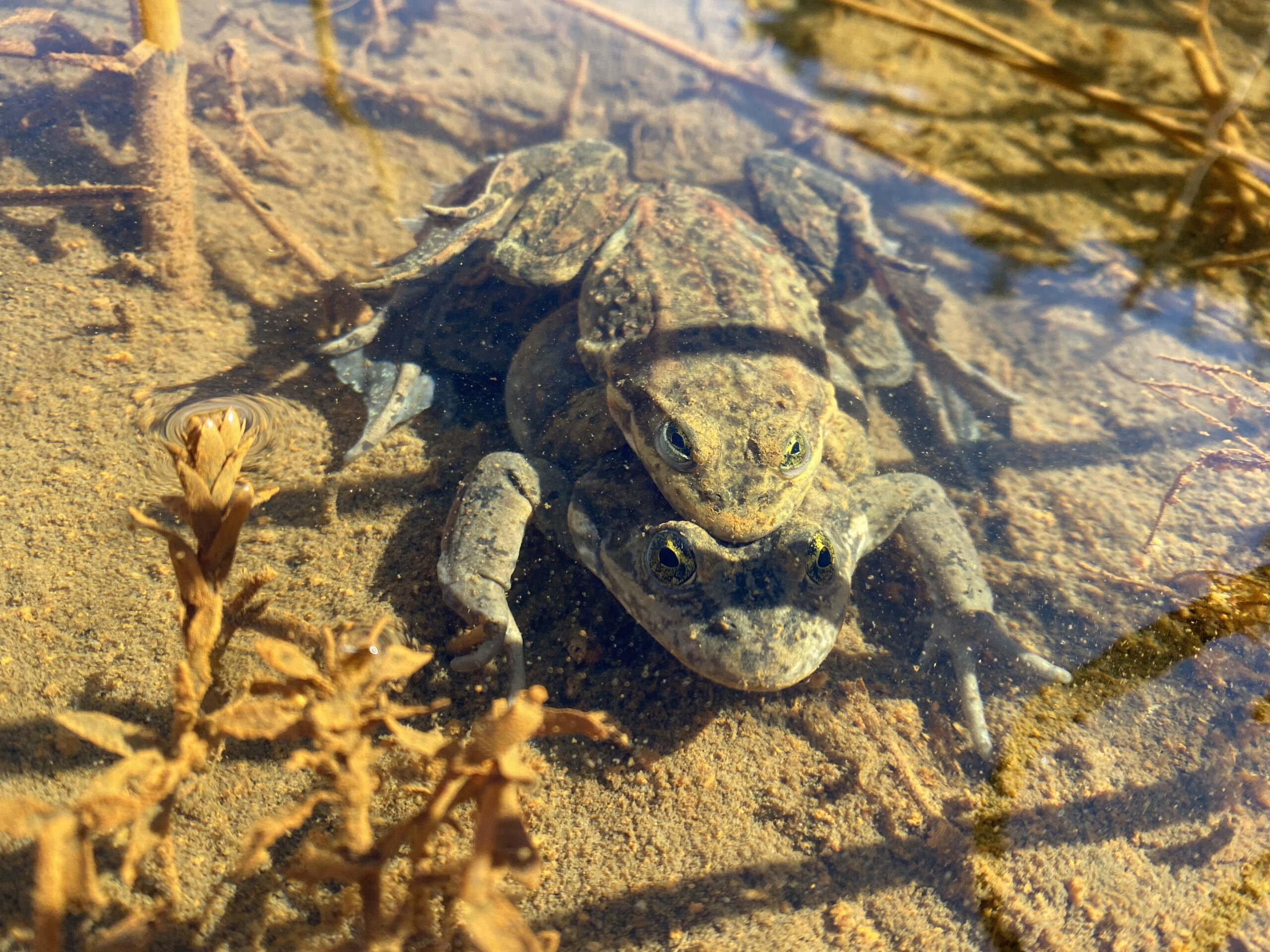
Take a look at some of the Oregon Spotted Frog photos our team has taken over the years.
Check out our Precious Frog Instagram for more pictures relating to our work in the field.
This work would not be possible without the support of the Oregon Spotted Frog Recovery Team, which brings together federal, provincial, and municipal government partners, as well as independent biologists, academic researchers, zoos and aquariums, and many others.
The Precious Frog program is financially supported by the partners below, and by generous contributions from people like you. Thank you.