What is an Amphibian?

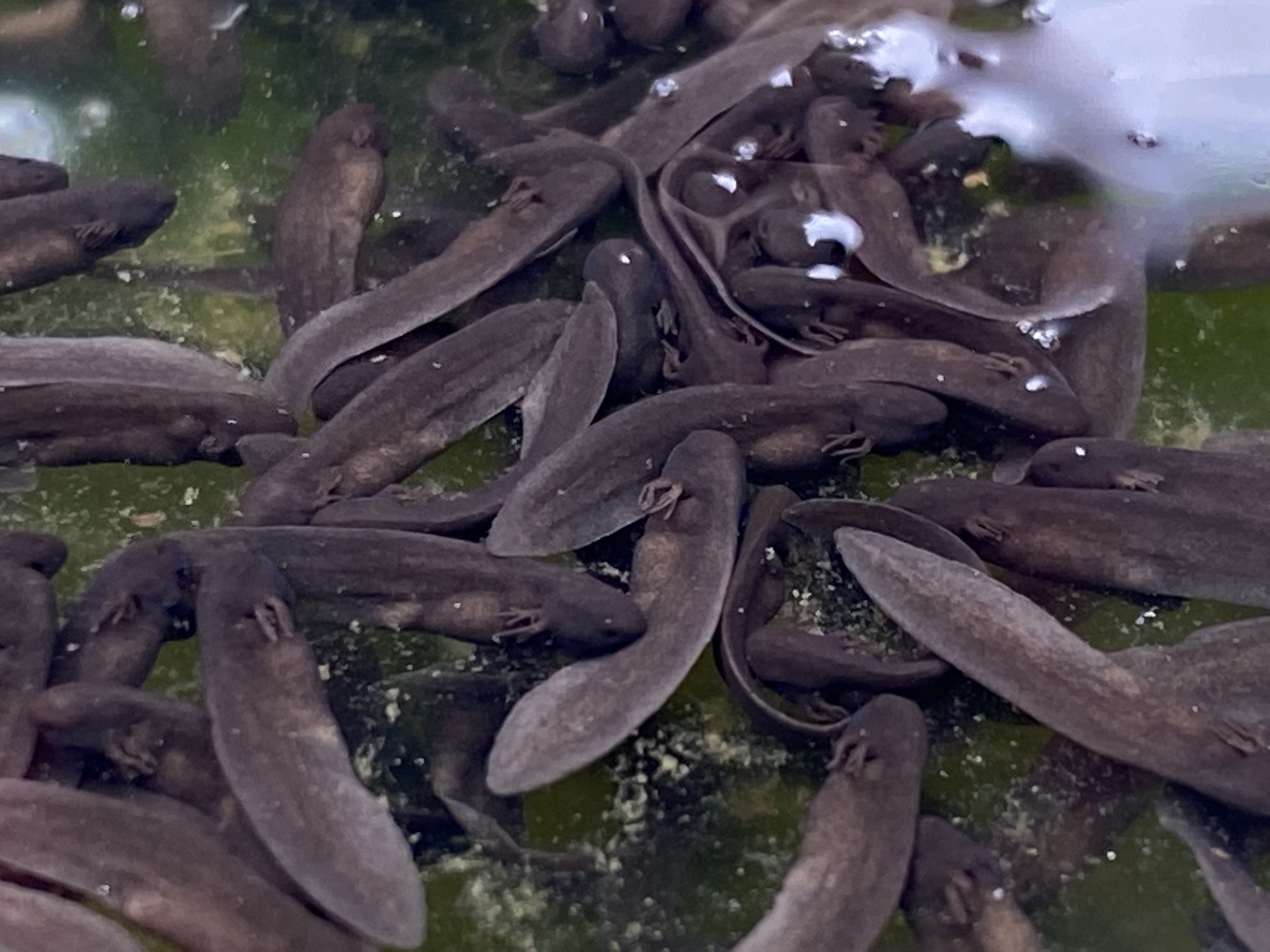
The word “amphibian” loosely translates to mean “double life”, and this is a good description of animals that fit into this category. Amphibians in the Fraser valley are frogs, salamanders, newts and toads. These are animals that usually begin their lives in water and later move to land. Eggs are typically laid in ponds and wetlands before hatching out into fish-like larvae often called tadpoles. These aquatic juveniles spend some time in the water before they transform into their adult forms in a process known as metamorphosis. From there the young amphibians leave the water to spend most of their time on land. Upon maturity, these young frogs, toads and salamanders will eventually return to their rearing grounds to breed, completing their life cycles.
Who Are Our Native Amphibians?

In the Lower Fraser Valley, we have five species of native frogs and six species of salamanders. They are found in a variety of habitats, ranging from low laying wetlands to high altitude forests.

The Frogs

With four legs and no tail, frogs are the stereotypical wetland inhabitant. This group includes both toads and treefrogs under the general banner of frog and encompasses species that live in a wide variety of habitats.

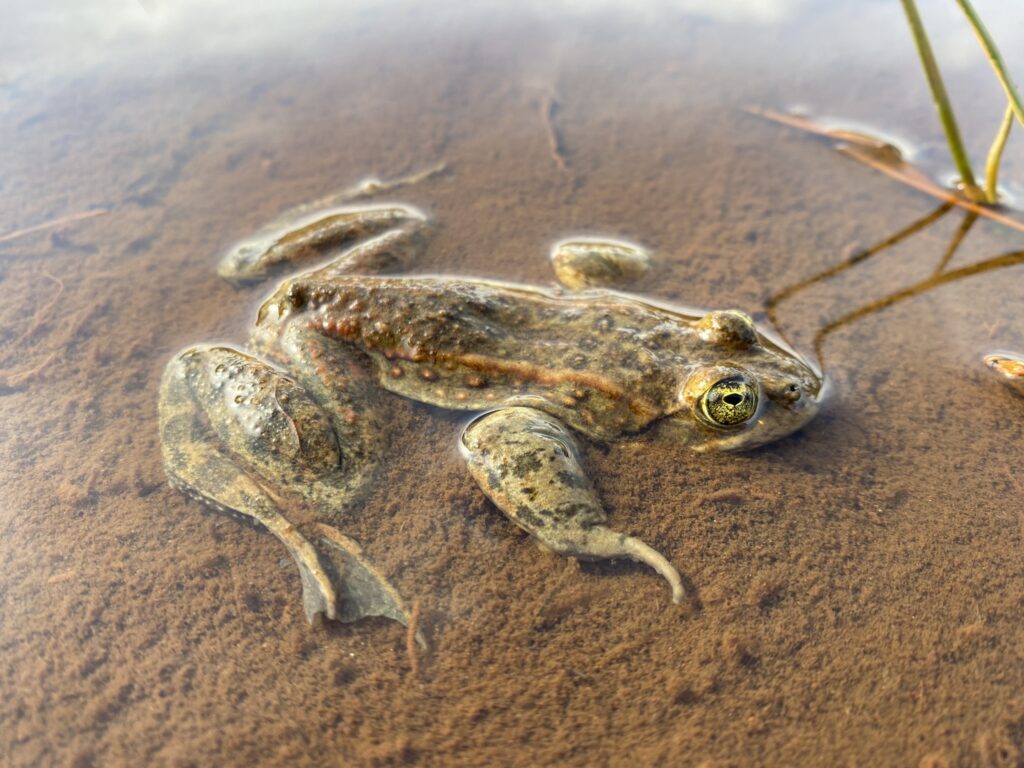
Oregon Spotted Frog (Rana pretiosa)

A highly aquatic amphibian, these are mid-sized frogs that grow up to about 10 cm in body length. They are usually found in shades of browns, greens and reds. Sometimes confused with the Red-legged Frog due to their similar coloration. This species is considered to be Canada’s most endangered amphibian. Only found in the Fraser Valley, this species is a major part of our efforts to preserve amphibians. To learn more about the FVC’s work with this species, click here.

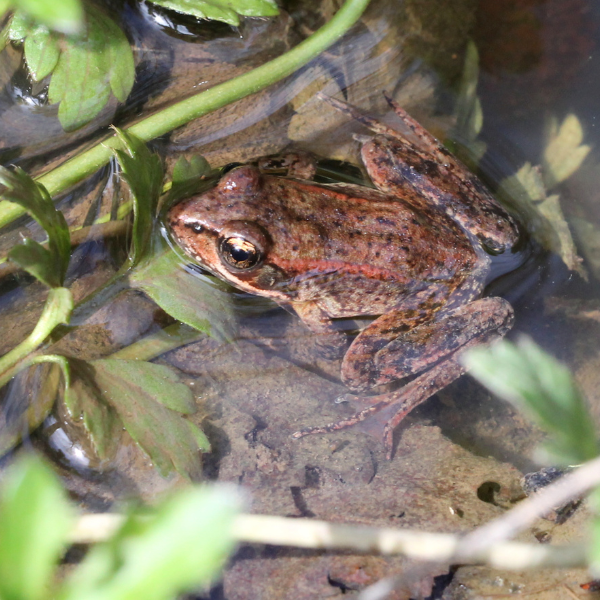
Northern Red-legged Frog (Rana aurora)

Another middle-sized frog at 10-12 cm in body length, these amphibians can have a wide range of browns, reds, oranges and yellows. They have ridges down either side of their back that extend from behind their eyes and often come with a red underside to their leg. The easiest way to tell these frogs apart from Oregon Spotted Frogs is a yellow patch that is usually present on their hips. These frogs are another species that is at-risk in BC. In the Fraser Valley they are found in patches of remnant forest near ponds and wetlands.


Western Toad (Anaxyrus boreas)

A large, warty frog that usually has a cream to white colored stripe down the length of their back. They are the largest native frog in our region, growing up to around 15 cm in body length. They are only surpassed in size by the invasive bullfrog. Their young will migrate out of their wetlands during the summer in huge numbers. The FVC has played a major role in helping the toads of Ryder Lake to migrate every summer. To learn more about this, visit the toad migration page.


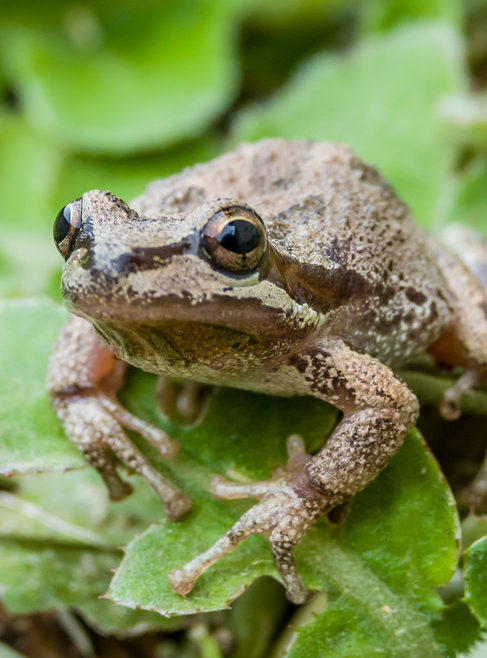
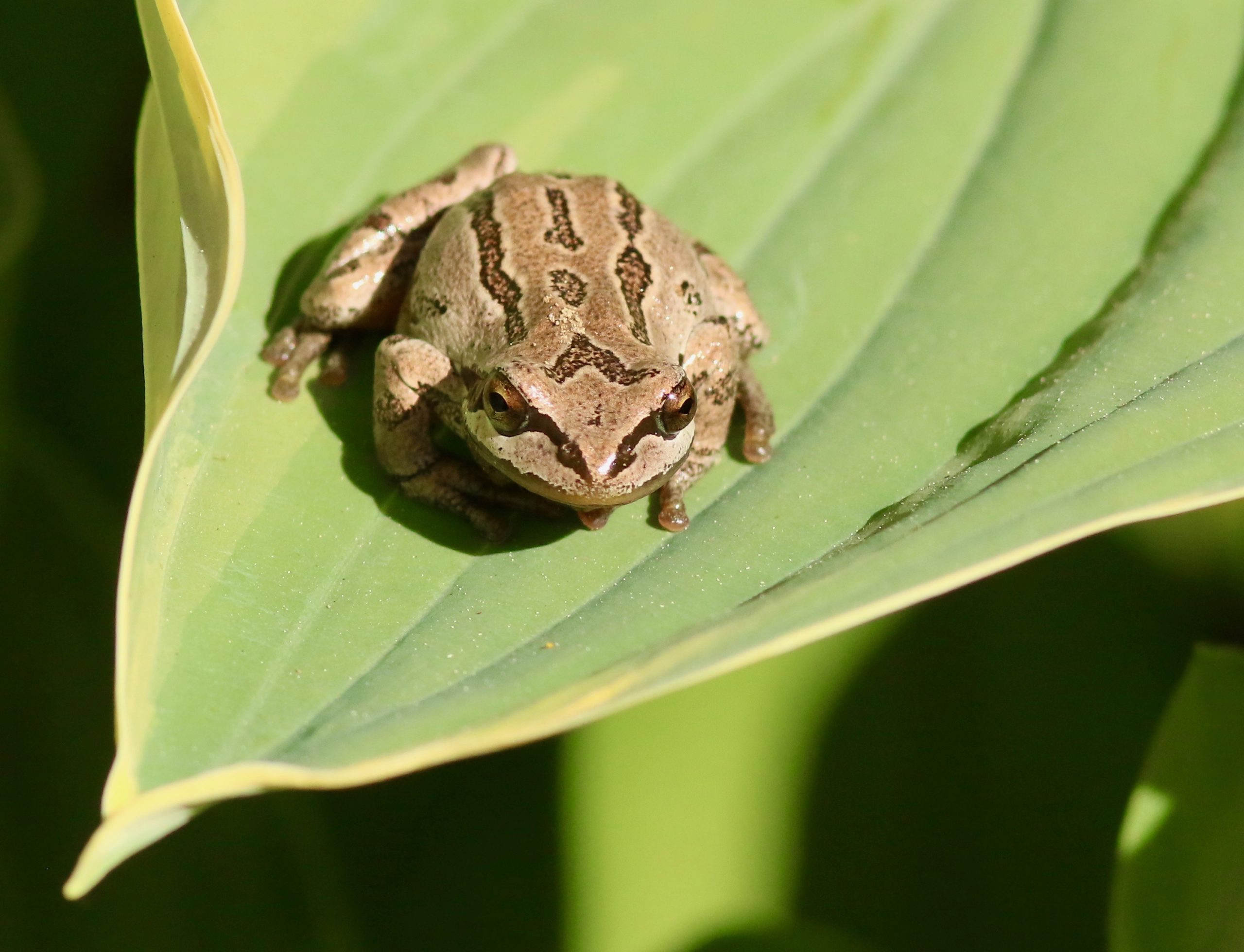
Pacific Treefrog (Pseudacris regilla)

Small and agile at an adult size of 5 cm, these frogs come in a huge variety of patterns and colors. They always have a black “mask” behind their eyes and can use their sticky toe pads to climb nearly any surface. Also known by the name of “Pacific Chorus Frog” they make the loud “ribbit-ribbit” sound that is often heard in the spring. As the most common native frog species in the Fraser Valley, Treefrogs will often be found in unexpected places.

Pacific tree frogs (Pseudacris regilla) are common in Monterey, California. Their range includes California, Oregon, Washington, Canada and southern Alaska.

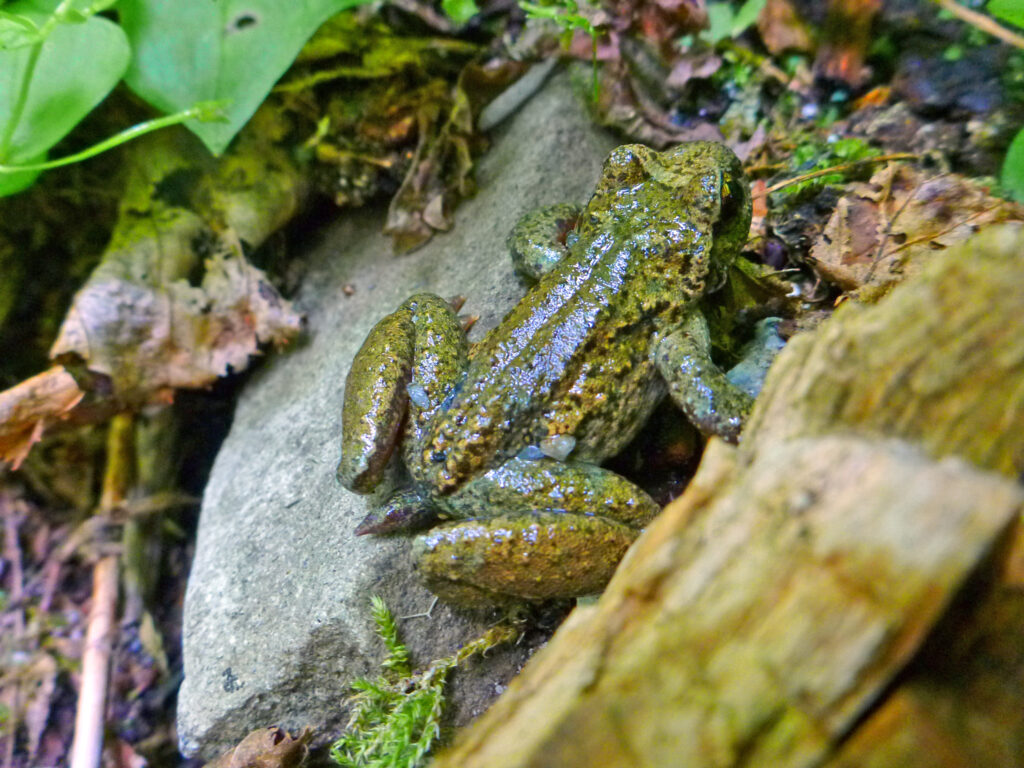
Coastal Tailed Frog (Ascaphus truei)

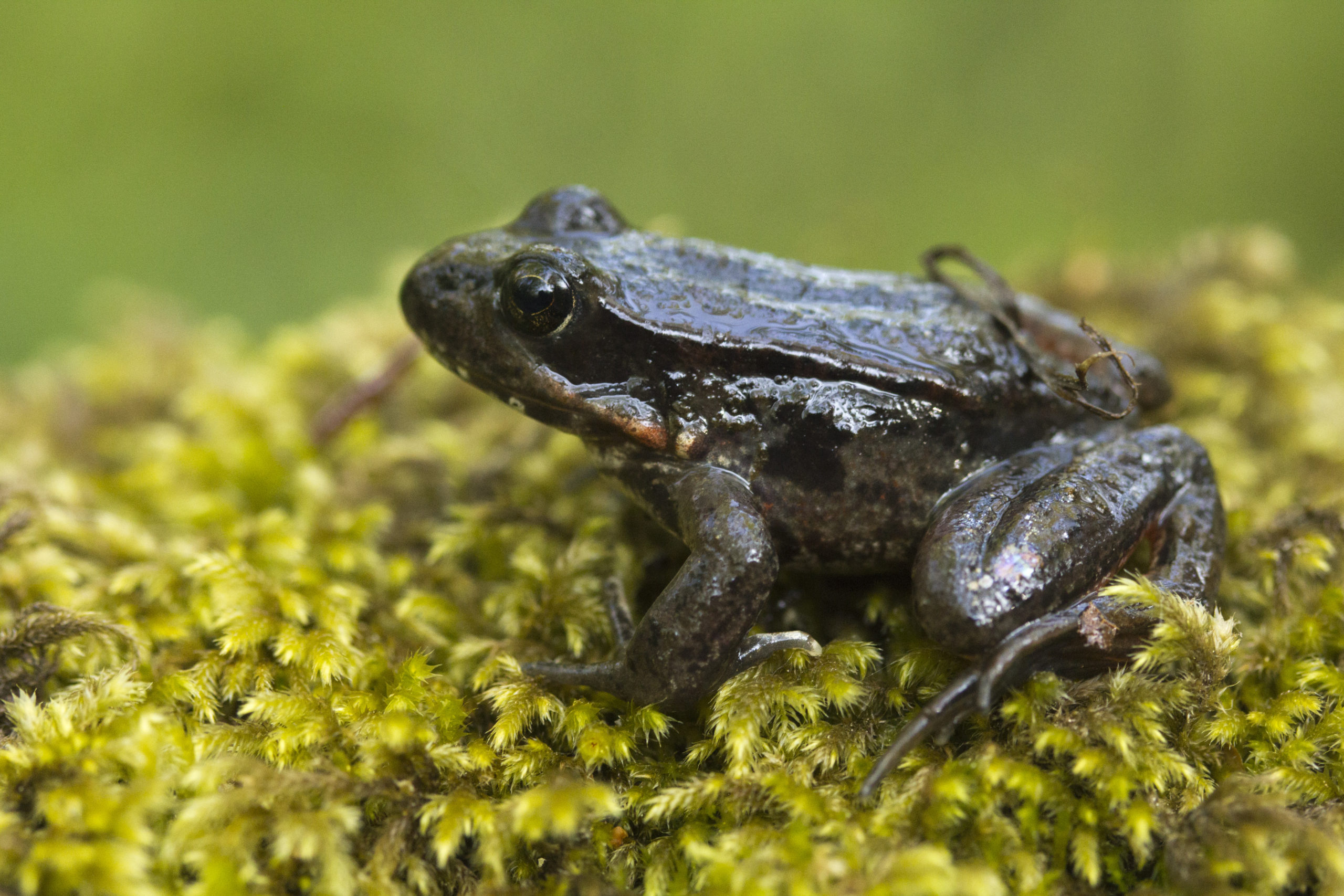
A secretive and unusual species of frog, they are rarely found around human habitation. Living around fast-flowing mountain streams, their lives are tied closely to these bodies of water. Their “tails” are an adaptation to a life around moving water and are only found on the males of the species. They are small at around 5 cm from front to back, with hues of brown and sometimes green. Unlike other local frogs, they have vertical pupils.


The Salamanders

With four legs, a sprawling posture and a tail, salamanders can often be confused for reptiles such as lizards. Despite this similarity, these animals are closely related to frogs and have the same wet skin and water-reliant lifestyle as their hopping cousins. The salamander group also includes newts as a subgroup.

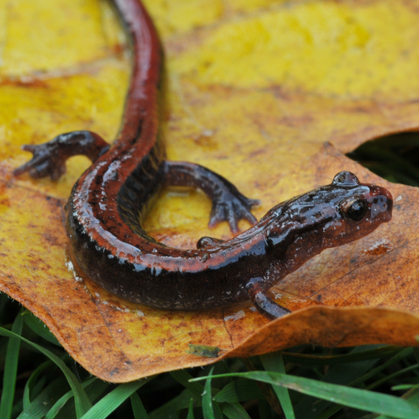
Western Red-backed Salamander (Plethodon vehiculum)

These small salamanders can be incredibly abundant in the right habitat and are some of the most common amphibians in the Fraser Valley. Growing up to around 12 cm long on average, they have a streamlined, slim shape when compared to other salamanders. Their legs are relatively small compared to their bodies. They typically have a red stripe running down the length of their back, though the color of the stripe is highly variable. Colors found on these salamanders include red, orange, yellow, black, white, silver and gold.


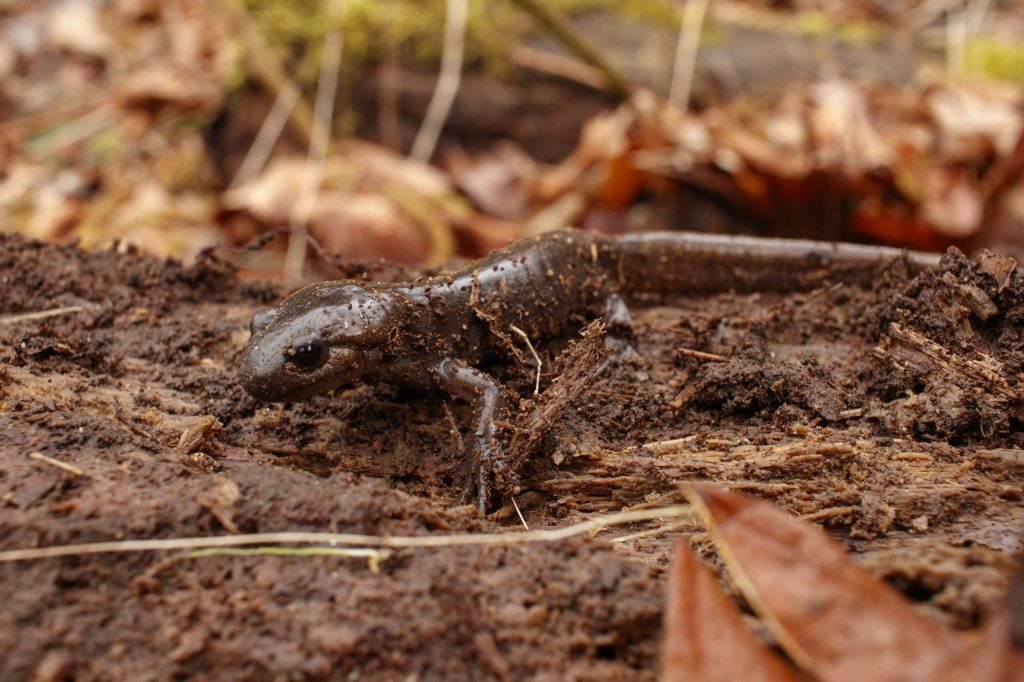
Northwestern Salamander (Ambystoma gracile)

This species is one of the largest found in the area, and can grow to be roughly 20 cm long from snout to tail tip. They are sometimes confused with our other large species, the Coastal Giant Salamander.  They are normally black or brown, with shiny skin and large raised glands behind their eyes. Their bodies are robust with relatively strong legs. As adults, they are patternless and generally the same color all over their bodies. They can sometimes be found in ponds and wetlands as aquatic adults with gills and an enlarged tail.


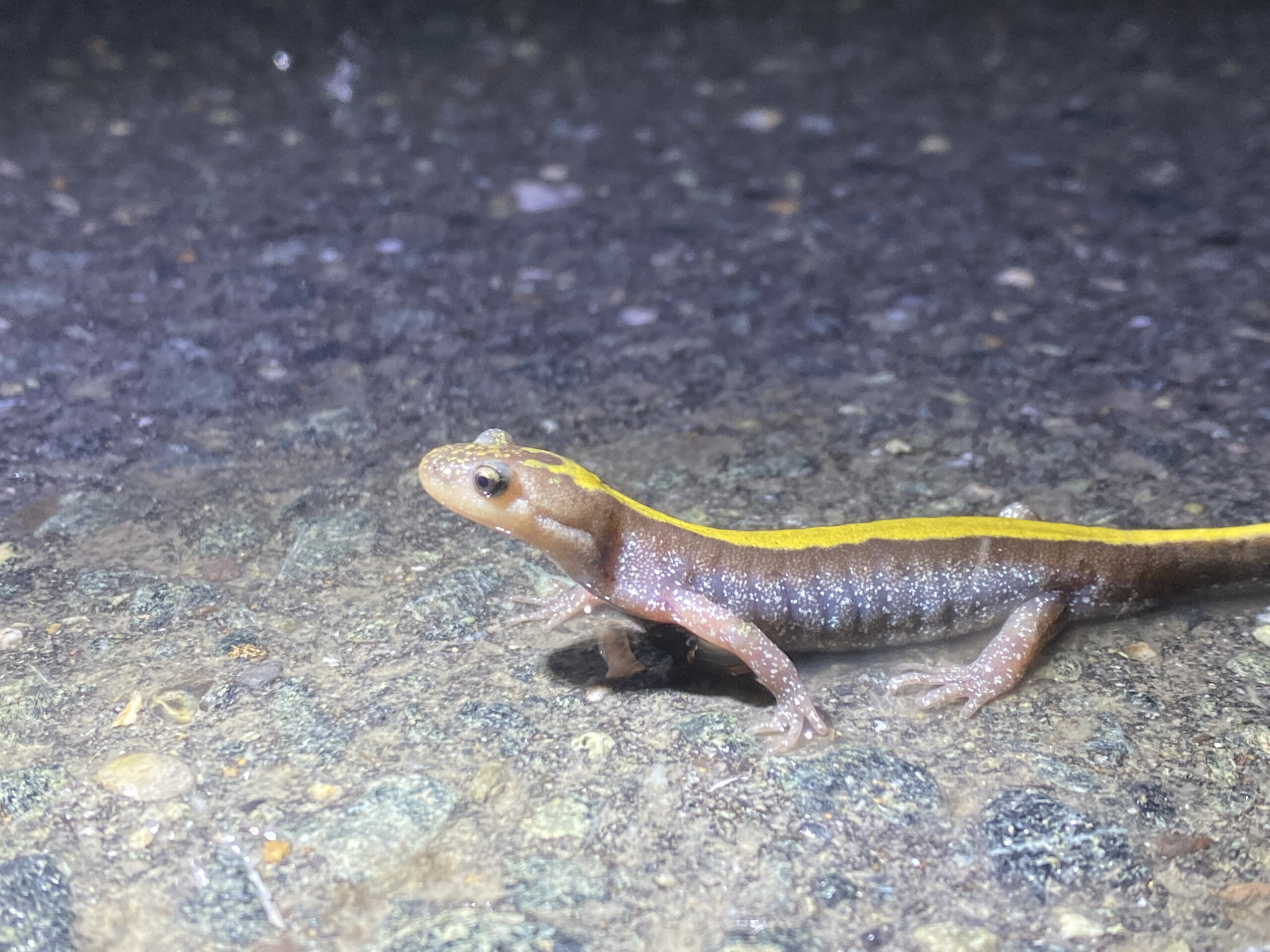
Long-toed Salamander (Ambystoma macrodactylum)

A species that is characterized by a large yellow stripe down the back, and an elongated toe on their back feet. They rely on standing bodies of water to breed and are one of the species that migrate to and from wetlands. Sometimes confused with the Western Red-backed Salamander, this species is larger bodied on average and can be identified by its namesake long toe on its back feet. They can get to be around 13 cm long from head to tail.

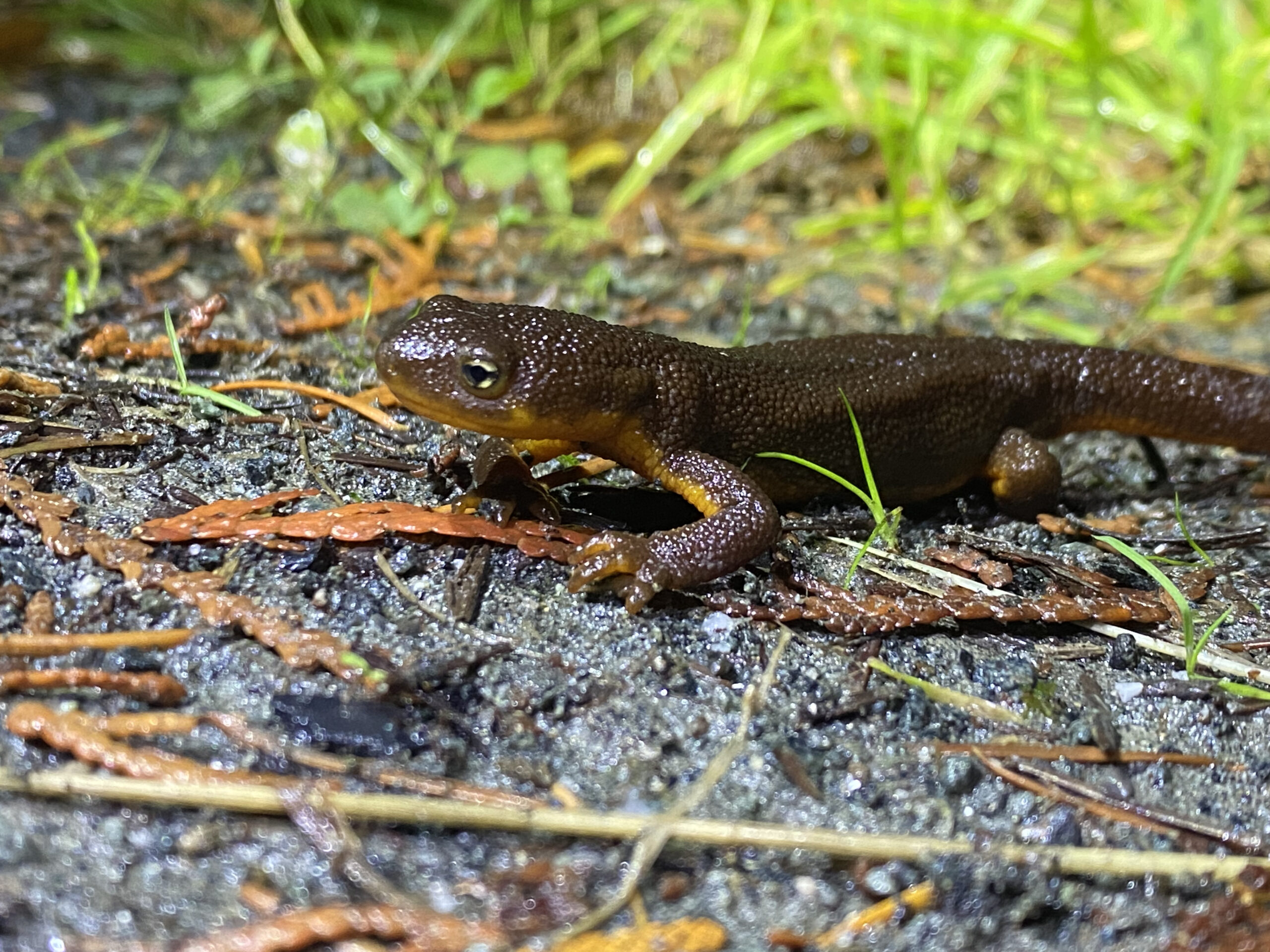
Rough-skinned Newt (Taricha granulosa)

The only newt found in BC, these animals have a black or brown back and a bright reddish-orange belly. Their skin is bumpy as their name suggests, unlike other salamanders. These are medium sized salamanders and can attain an adult size of around 15 cm long. When threatened they can lift their legs and arch their backs to display the orange warning colors as a message to predators. When pressed, they will release a poison from their skin that is potent enough to keep most animals from being interested.  Another species that uses wetlands to breed, they can be found in high numbers crossing certain roads during the right time of the year.

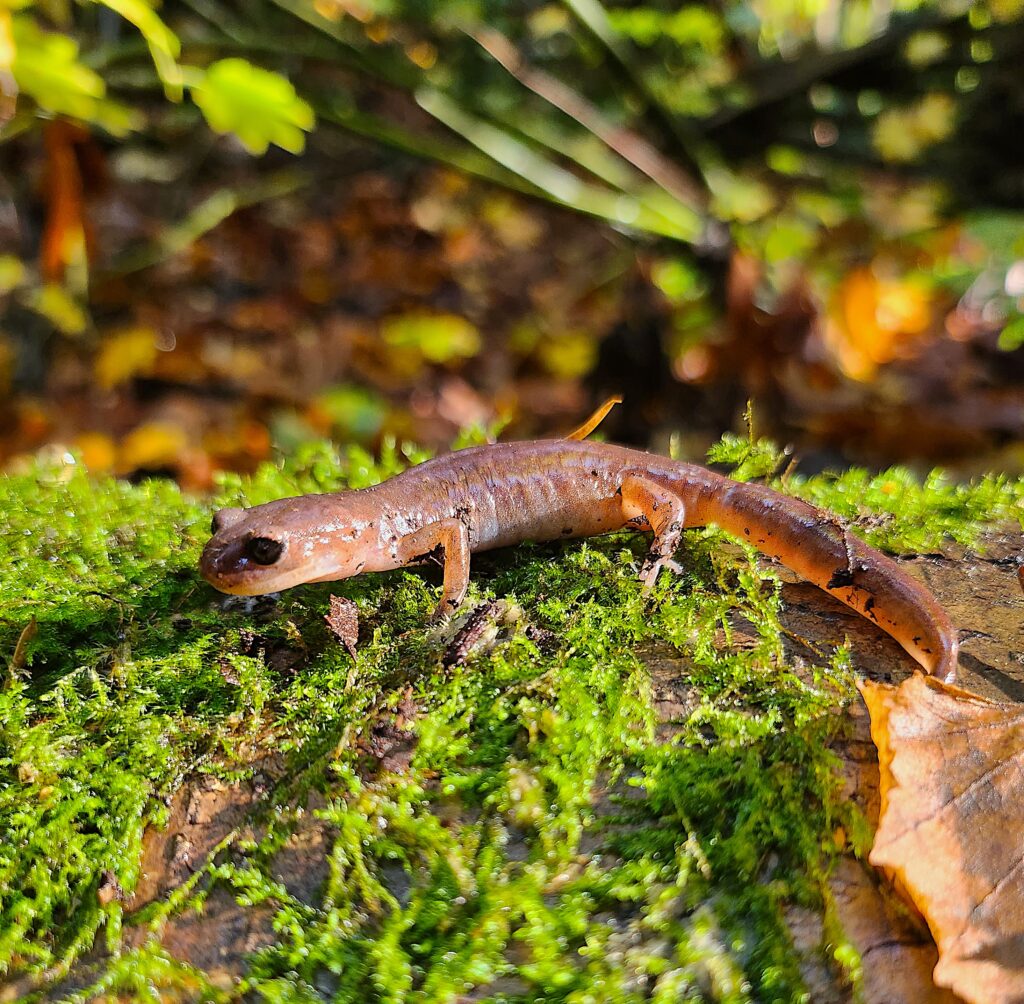
Ensatina (Ensatina eschscholtzii)

This is a unique species of salamander in that it does not require water to reproduce, unlike most other amphibians. They lay their eggs on land, which hatch into miniature versions of adults. This species is usually a uniform color of brownish orange, or sometimes pink. They have large, buggy eyes that protrude far out form their head when compared to other salamander species. Generally the adults are around 12 cm long from the tip of their snout to the end of their tail. When attacked by a predator, these salamanders can drop their tail as a distraction in much the same way a lizard would.


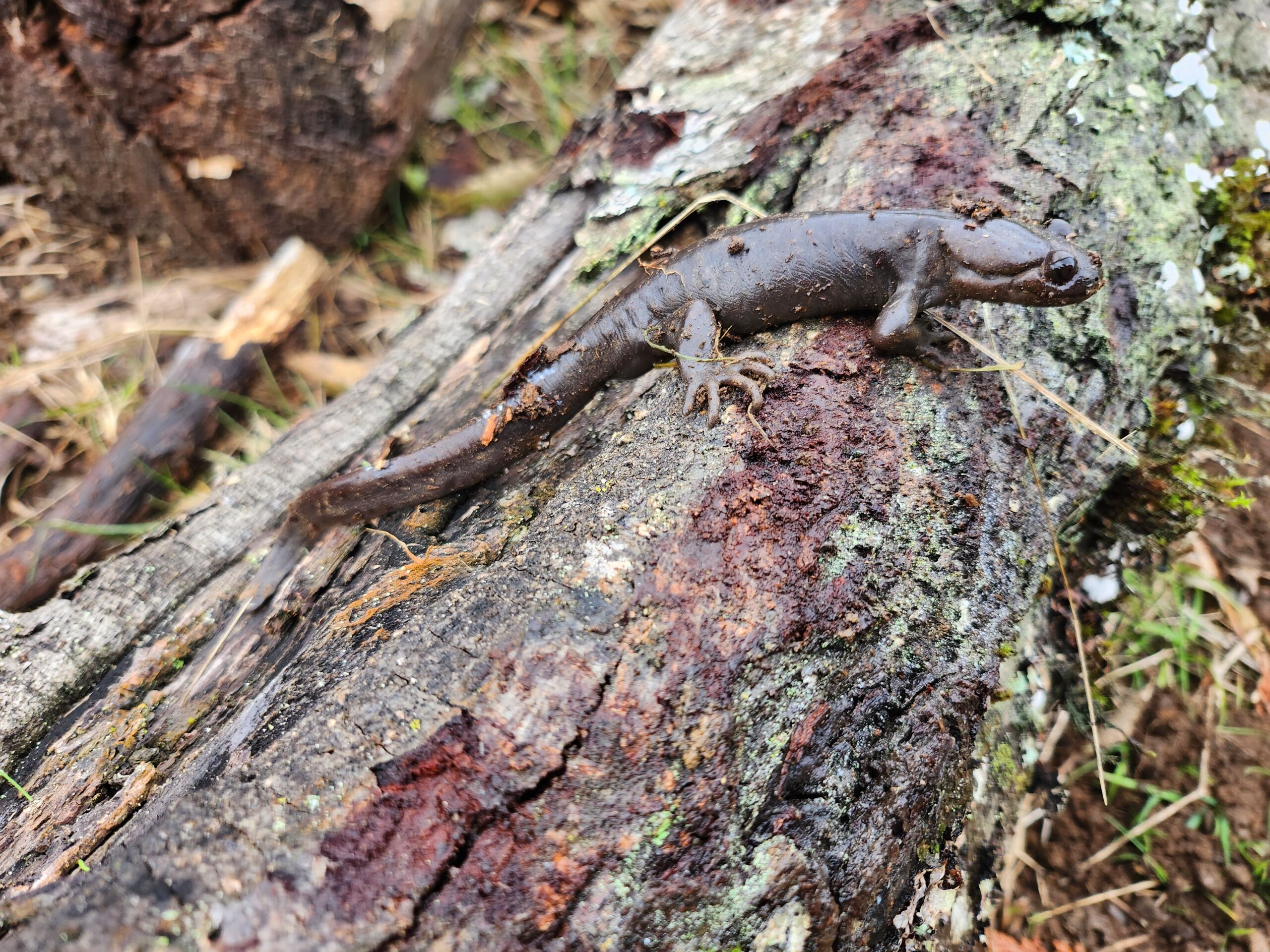
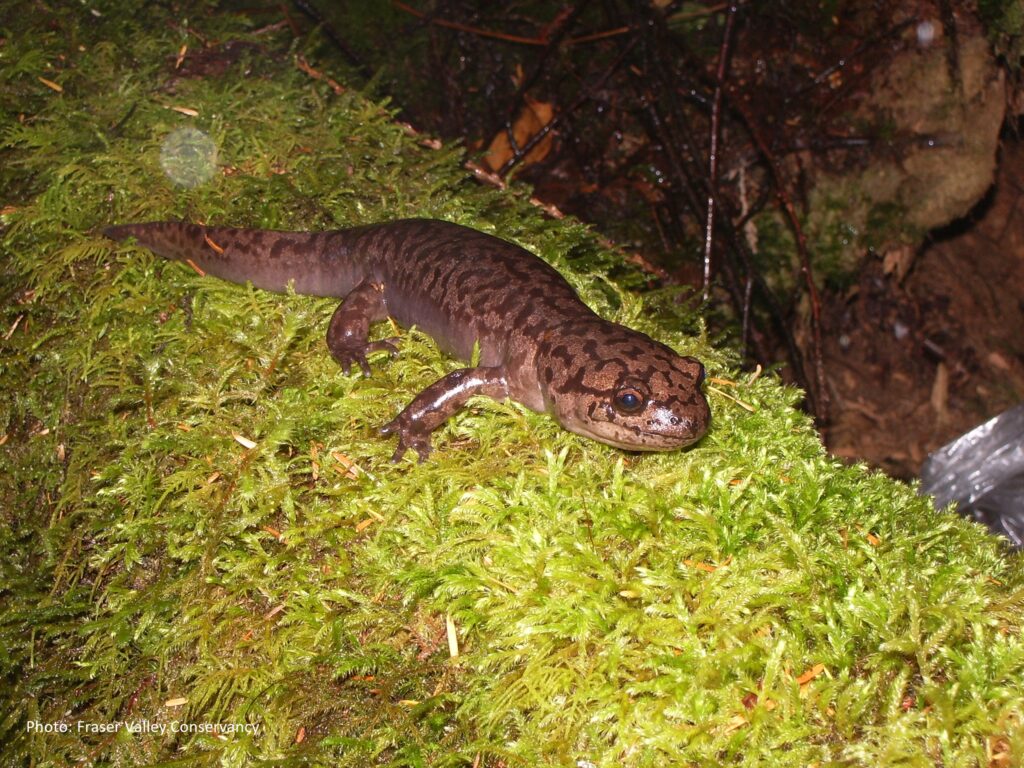
Coastal Giant Salamander (Dicamptodon tenebrosus)

The largest species of salamander found in Canada, these rare animals are secretive and often hard to find.  Living only in a select few mountain streams near Chilliwack, their mottled brown and grey coloration keeps them well hidden both in streams and on land. Capable of living their whole lives as aquatic adults, this species can morph into terrestrial forms when the need arises. As terrestrial adults, they are capable of growing up to 30 centimeters long from their head to the end of their tail.

Frog Finders

Have you seen any of these amphibians? Or maybe an invasive species of frog? We want to know!

The data we collect about amphibian locations is essential for our conservation and habitat enhancement work as it helps us make informed decisions about where and how we direct our efforts.

Send us your amphibian observations at our Frog Finders program page or if you use iNaturalist, join our project there. Photos, videos and sound clips of calling frogs are all useful to us, so send them in!

PC Grace Overduin

More Resources

Frog and Toad ID guide

Download

Salamander ID guide

Download

Detailed ID Guide for Frogs and Toads of low-elevation wetlands in the Fraser Valley

Download

Identification guide to Frog and Toad tadpoles of the Fraser Valley

Download

Funders and Partners

Our programs are made possible by our wonderful donors and supporters as well as funding from these partner organizations. Thank you.